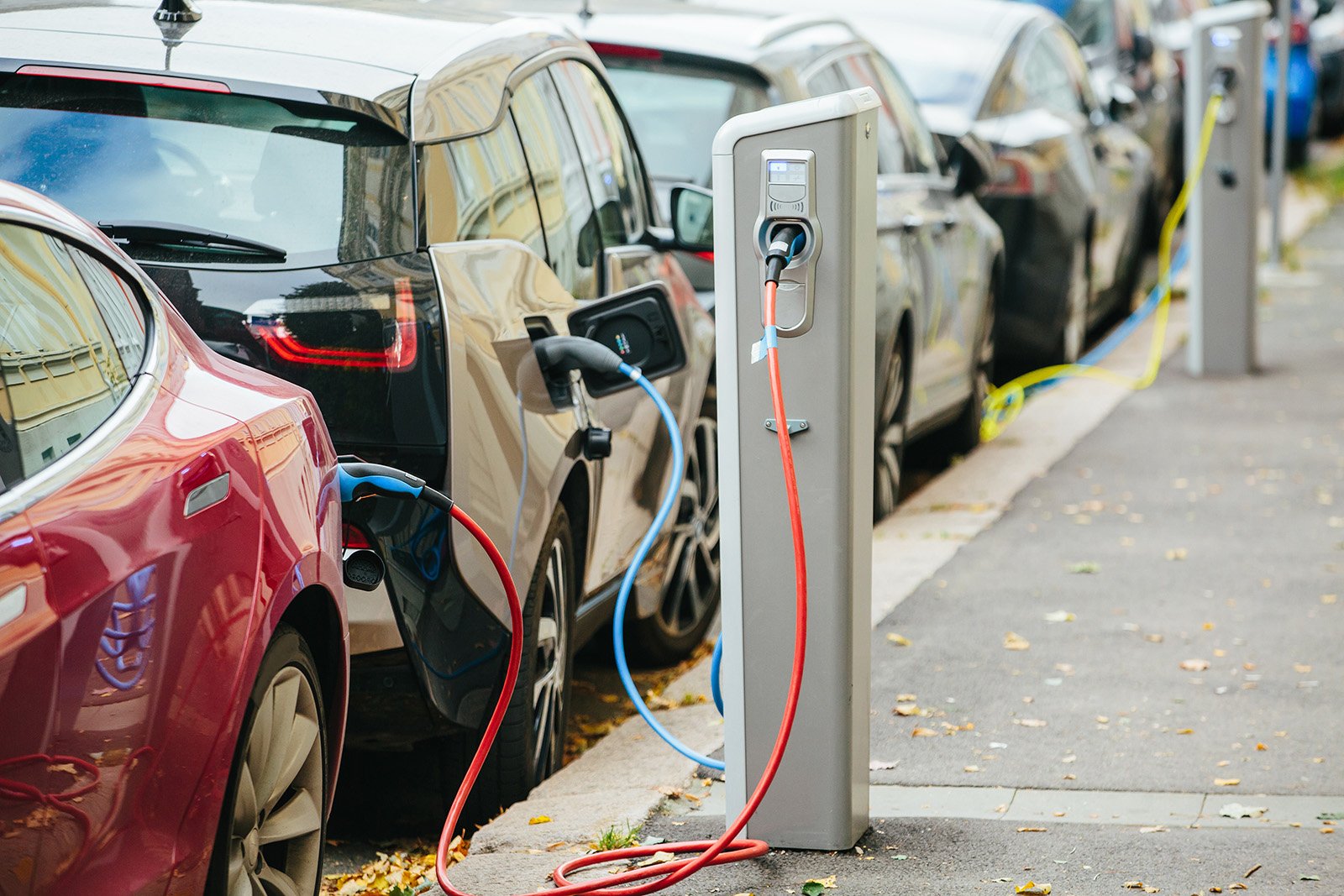
Rental companies can help accelerate electric vehicle adoption by giving drivers a low-risk opportunity to experience EVs before buying one. By providing access to different models, explaining charging requirements and supporting customers throughout the rental, they can turn unfamiliar technology into a practical everyday driving experience. Rental fleets in markets such as New Zealand and Australia also give travellers an opportunity to test electric driving on longer journeys, helping build confidence around range, charging and vehicle performance.
Electric vehicle adoption is no longer limited to early adopters or technology enthusiasts. Electric cars are becoming a more familiar part of everyday transport, with growing model availability, improving charging infrastructure and increasing consumer awareness.
According to the International Energy Agency, global electric car sales exceeded 20 million in 2025, meaning one in four new cars sold worldwide was electric. The IEA expects electric cars to account for close to 30% of global car sales in 2026. While adoption varies significantly between countries, the direction of travel is clear: electric vehicles are becoming an increasingly important part of the automotive market.
Yet purchasing an EV remains a significant decision. Drivers may have questions about charging, range, battery life, running costs and whether an electric vehicle will actually suit their lifestyle.
This is where rental companies have an important role to play.
Rather than asking consumers to make a major financial commitment based solely on advertising, reviews or a short test drive, rental companies can provide an opportunity to experience electric driving in real-world conditions.
Why Electric Vehicle Adoption Is Accelerating
Several factors are contributing to the growth of electric vehicle adoption.
One is the expanding range of available vehicles. Drivers can increasingly choose between compact city cars, family SUVs, luxury models and commercial vehicles with electric powertrains. As manufacturers introduce more models, consumers have more opportunities to find an EV that fits their needs.
Charging infrastructure is also developing. While charging availability remains an important consideration for EV drivers, public networks are expanding in many markets. In New Zealand, for example, NZTA’s EVRoam system provides live information about public EV charging infrastructure, including charger locations and availability. This type of information can make planning an electric road trip more straightforward.
Running costs are another consideration. Electric vehicles generally have fewer moving mechanical components than conventional petrol or diesel vehicles, while electricity can cost less than petrol or diesel for some driving patterns. Actual savings depend on factors such as electricity prices, fuel prices, vehicle efficiency, charging arrangements and driving habits.
Environmental considerations are also influencing the transition. EVs do have environmental impacts associated with manufacturing, battery production and electricity generation. However, lifecycle assessments generally find that battery electric vehicles produce lower greenhouse gas emissions than comparable internal combustion vehicles over their lifetime. The size of the benefit depends on factors including the electricity mix, vehicle size and manufacturing processes.
For drivers who are curious about the environmental differences between powertrains, the International Energy Agency’s EV Life Cycle Assessment Calculator provides a useful way to explore how these variables affect lifetime emissions.
The result is an automotive market where more consumers are interested in electric vehicles, but many still want to understand how an EV will work in their own lives.
How Rental Companies Help Introduce Drivers to Electric Vehicles
Rental companies are uniquely positioned to bridge the gap between curiosity and practical experience.
A customer may have read about an EV but never driven one. Renting an electric vehicle changes that. Instead of simply learning about regenerative braking, charging or battery range, the driver can experience these features directly.
This matters because some aspects of EV ownership are difficult to understand until they are used in practice.
For example, a first-time EV driver may discover that one-pedal driving is intuitive and convenient. Another driver might appreciate the quietness of an electric powertrain but realise that they need to plan charging stops differently on longer journeys.
Rental companies can also expose drivers to different EV models. Someone considering an electric SUV might rent one for a weekend trip and discover how its boot capacity, seating arrangement and range work for their family. Another driver might choose a compact EV for an urban holiday and discover that it suits their everyday driving better than expected.
This makes rental companies an important source of hands-on education.
The experience can be particularly valuable for travellers. A visitor hiring a car in New Zealand or Australia may drive several hundred kilometres during a holiday, requiring them to think about charging, route planning and energy consumption in a way that a short dealership test drive cannot replicate.
The Benefits of Renting an Electric Vehicle
Experience EV driving without buying a vehicle
The most obvious advantage is the ability to try an EV without committing to ownership.
Buying a vehicle represents a substantial financial decision. Renting provides a comparatively low-commitment way to determine whether electric driving is suitable.
A rental can answer practical questions such as:
- How comfortable is the vehicle on a long journey?
- How quickly does the battery charge?
- How much range is available in everyday driving?
- Is the boot large enough for luggage or equipment?
- How easy is it to locate public chargers?
- How does the vehicle perform on motorways and hills?
- How does regenerative braking feel?
- Does the vehicle fit into an existing lifestyle?
These questions can be more useful than specifications alone.
Understand real-world range
Range anxiety remains one of the most commonly discussed concerns surrounding EVs.
A rental provides an opportunity to discover how range works in practice. Drivers can observe how factors such as speed, weather, terrain, heating, air conditioning and driving style affect energy consumption.
This can replace uncertainty with experience.
For travellers choosing a vehicle for outdoor adventures, the wider question is also about matching a vehicle to the journey. Factors such as storage, terrain, comfort and distance can influence the appropriate choice, as explored in this guide to choosing a vehicle for an outdoor lifestyle.
Discover charging in real conditions
Charging can initially seem complicated to someone who has only driven petrol or diesel vehicles.
Renting an EV gives drivers the opportunity to understand the process. They can locate a charger, connect the vehicle, start a charging session and see how charging time fits into a journey.
After doing this once or twice, the process can become much less intimidating.
Compare running costs
Rental drivers can also gain a better understanding of how much energy an EV uses during a typical trip.
While a short rental cannot provide a complete ownership-cost analysis, it can help drivers understand energy consumption and compare it with their previous experience of petrol or diesel vehicles.
For consumers researching vehicle ownership more broadly, factors such as depreciation and resale value also matter. Looking at global car valuation trends and how they are evolving worldwide provides additional context around the wider vehicle market.
How Rental Companies Can Support EV Drivers
Simply adding EVs to a rental fleet is not enough. Companies can make the experience considerably easier by providing clear information and practical support.
Provide a clear EV handover
First-time EV renters benefit from a short but comprehensive explanation before they leave the rental location.
Staff can demonstrate:
- How to start and operate the vehicle
- How to monitor battery charge
- How regenerative braking works
- How to locate charging stations
- How to initiate a charging session
- How long charging is likely to take
- What to do if the battery becomes low
- How to access roadside assistance
This can transform a potentially intimidating experience into a straightforward one.
Make charging information easy to access
Rental companies can provide customers with information about charging networks, compatible connectors and useful journey-planning tools.
This is particularly important for tourists.
New Zealand already provides a useful example through EVRoam, which brings together information about public charging infrastructure and helps drivers identify charger locations and availability.
Australia is similarly expanding its charging infrastructure as EV uptake grows. For rental companies operating across both countries, providing customers with clear charging information can be an important part of the rental experience.
Offer suitable vehicle choices
Not every EV is appropriate for every customer.
A rental company can help drivers choose based on trip length, luggage requirements, passenger numbers and intended driving conditions.
For example, a compact electric car may work well for a city break, while a larger EV may be more appropriate for a family road trip.
This approach also reinforces an important lesson about vehicle ownership: the right car depends on how it will actually be used.
Gather customer feedback
Rental companies have another valuable source of information: their customers.
Because rental fleets are used by a wide range of drivers, companies can identify recurring questions and concerns. This feedback can help improve vehicle selection, staff training, charging information and customer support.
Over time, rental companies can therefore become an important part of the broader EV education ecosystem.
Common Concerns About Electric Vehicles
Despite their growing popularity, EVs still generate questions for drivers.
“What if I run out of charge?”
This is one of the most common concerns among first-time EV drivers.
The solution is generally better journey planning. Drivers need to understand their vehicle’s usable range, identify suitable charging points and allow an appropriate buffer rather than treating the maximum advertised range as a guaranteed distance.
Rental companies can make this easier by providing practical guidance before the customer begins their journey.
“Does charging take too long?”
Charging times vary considerably depending on the vehicle, charger and battery state.
Rapid and high-power chargers can replenish a significant amount of battery capacity relatively quickly, while slower charging may be better suited to overnight stays or longer periods when the vehicle is parked.
For many drivers, the biggest adjustment is changing the idea of “refuelling” from a dedicated stop to something that can happen while they are already parked.
“Are EVs suitable for long-distance driving?”
They can be, but suitability depends on the vehicle, route and charging network.
Long-distance EV travel requires more planning than simply checking the distance between two petrol stations. However, as charging infrastructure expands and vehicle ranges improve, longer electric journeys are becoming increasingly practical.
This is another reason rental experience can be valuable. A driver can test an EV on a genuine road trip rather than relying on assumptions.
“Are EVs really better for the environment?”
EVs are not impact-free. Battery manufacturing requires energy and raw materials, and the environmental performance of an EV depends partly on how its electricity is generated.
However, lifecycle analysis is more useful than comparing only tailpipe emissions. The IEA’s analysis indicates that battery electric vehicles generally have substantially lower lifetime greenhouse gas emissions than comparable conventional vehicles, although the difference varies between markets and vehicle types.
Consumers should therefore consider the full lifecycle rather than expecting a simple zero-impact label.
Conclusion
Rental companies have an opportunity to play a meaningful role in the transition towards electric mobility.
Their biggest contribution may not simply be the number of EVs they add to their fleets. It is the opportunity they give drivers to experience electric vehicles in everyday conditions.
For someone considering an EV, a rental can provide answers that a brochure cannot. Drivers can experience charging, assess real-world range, understand regenerative braking and determine whether an electric vehicle fits their lifestyle.
New Zealand and Australia provide useful examples of how this experience can intersect with growing charging networks and expanding EV markets. Whether someone is travelling for business, taking a road trip or simply testing an EV before making a purchase, rental companies can make electric mobility more accessible and less unfamiliar.
As EV adoption continues to grow, the role of rental companies can extend beyond providing transportation. By combining electric vehicles with good customer education, practical charging information and real-world experience, rental companies can help more drivers understand what switching to an EV actually involves.
Frequently Asked Questions
Can renting an electric vehicle help me decide whether to buy one?
Yes. Renting an EV can provide useful real-world experience before making a significant purchase. It allows drivers to assess factors such as driving comfort, range, charging, luggage capacity, performance and energy consumption. A rental cannot perfectly replicate long-term ownership, but it can help answer many of the practical questions that arise when considering an EV.
Are electric vehicles more environmentally friendly than petrol cars?
In many circumstances, yes, when their full lifecycle is considered. EVs produce no tailpipe emissions while driving, but manufacturing the vehicle and battery creates emissions, and charging depends on the electricity source. Lifecycle assessments generally find that battery electric vehicles produce fewer greenhouse gas emissions over their lifetime than comparable internal combustion vehicles. The size of the difference varies according to factors such as electricity generation, vehicle size, battery production and driving patterns.
How do rental companies help first-time EV drivers?
Rental companies can support first-time EV drivers by providing a vehicle orientation, explaining charging procedures, identifying suitable charging networks and helping customers understand range and energy consumption. Clear instructions and practical advice can make the transition from petrol or diesel driving to an electric vehicle considerably easier.
Is an EV rental suitable for a long road trip?
It can be, provided the vehicle’s range and the available charging infrastructure are suitable for the planned route. Drivers should consider the distance they intend to travel, charging locations, expected charging times, weather, terrain and luggage requirements before setting out.
Do EV rental cars require different driving habits?
Some adjustment can be helpful. Regenerative braking means that an EV may slow down differently from a conventional vehicle, while drivers need to pay attention to battery charge rather than a traditional fuel gauge. After some time behind the wheel, many drivers find these differences become straightforward to manage.
Why are rental companies important to EV adoption?
Rental companies give people an opportunity to experience electric vehicles without purchasing one. This can reduce uncertainty and provide practical knowledge about charging, range and everyday usability. By offering EVs alongside conventional vehicles and helping customers understand how to use them, rental companies can contribute to greater familiarity with electric mobility.