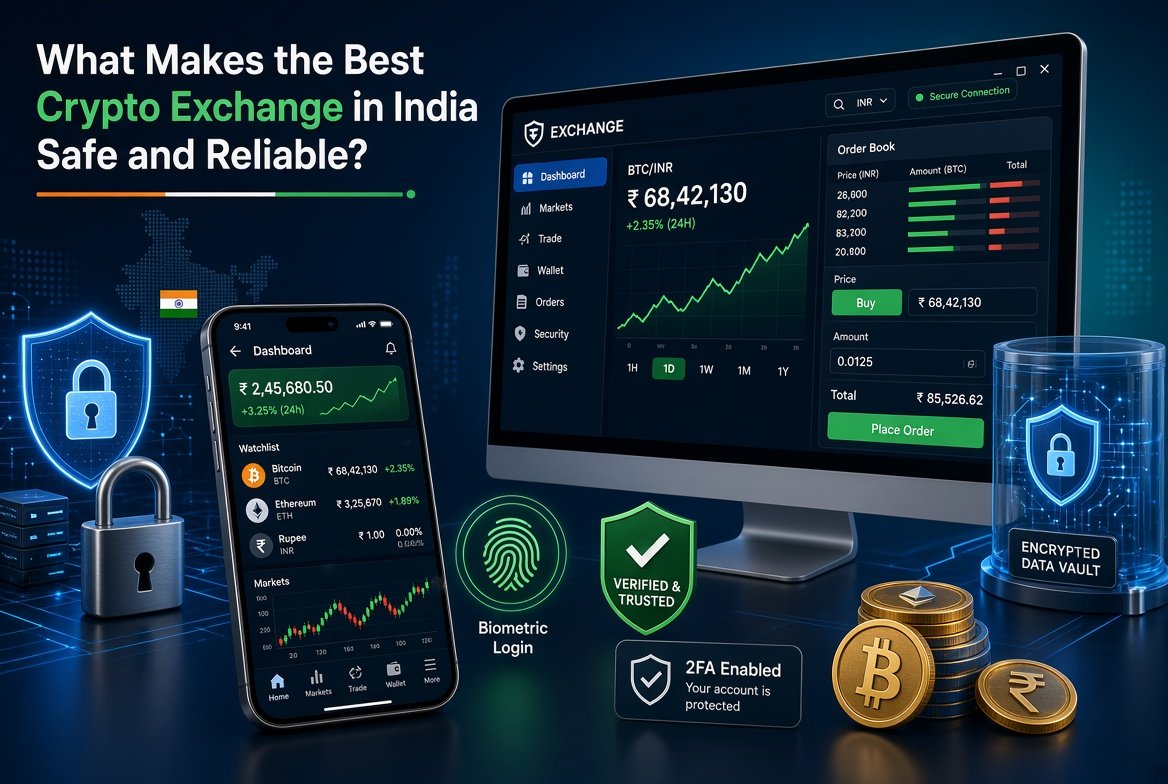
Flashy apps and fast matching engines mean nothing if your money vanishes overnight. Anyone trading crypto in India knows the drill: you need to look way beyond interface design. For Indian traders selecting the best crypto exchange in india, the priority is to assess how well a platform protects trading capital when technical or regulatory issues arise.
Getting these fundamentals right takes the guesswork out of picking a place to trade.
Core Trust Signals of a Reliable Crypto Platform
A dependable platform demonstrates safety through distinct operational parameters:
- FIU-IND Compliance & AML Safeguards:
Virtual Digital Asset Service Providers covered by India’s PMLA framework are required to register with the Financial Intelligence Unit-India (FIU-IND) as Reporting Entities and comply with applicable KYC, AML, transaction-monitoring, record-keeping and reporting requirements. FIU-IND registration indicates compliance with these AML obligations, but it should not be viewed as a government guarantee of an exchange’s financial safety or performance.
- Institutional Custody Architecture:
Secure venues may keep a significant portion of applicable crypto assets in cold-storage or multi-signature wallet arrangements. Keeping assets offline can reduce exposure to hot-wallet attacks, although no custody system can eliminate cybersecurity, operational or counterparty risks entirely.
- Transparent Fee Schedules:
A trustworthy venue provides clear execution costs, funding rates, and zero hidden markups. Transparent fee structures allow traders to calculate real execution costs without unexpected slippage or deposit penalties.
- Direct Local Fiat Integration:
Reliable platforms may offer direct INR funding through domestic payment methods such as UPI and IMPS. Direct deposits can reduce reliance on P2P counterparties and the associated risk of receiving funds linked to unknown third parties, although ordinary banking and compliance checks may still apply.
How Pi42 Engineering Redefines Platform Safety
Modern derivative venues like Pi42 offer alternative execution models for Indian traders managing asset security and regulatory friction:
- Bank-Grade INR Settlement Architecture:
Pi42 offers Crypto-INR perpetual contracts, allowing applicable trades to settle directly in Indian Rupees. This reduces the need to hold the underlying cryptocurrency and can lower exposure to hot-wallet on-chain risks.
- Reduced P2P Counterparty Risk
Direct INR payment options allow traders to fund their accounts without relying on P2P counterparties. This can reduce risks associated with receiving funds from unknown counterparties, although it does not eliminate all banking, fraud or compliance-related risks.
- Tax Alignment & Capital Efficiency:
Indian tax provisions under Sections 115BBH and 194S apply to qualifying transfers of Virtual Digital Assets, including a 30% tax on income from such transfers and, where applicable, 1% TDS on the consideration paid. Pi42 currently treats its INR-settled crypto perpetual contracts differently on the basis that traders gain price exposure through derivative contracts without transferring the underlying VDA. Accordingly, Pi42 does not deduct 1% TDS on these futures trades and states that the 30% VDA tax does not apply to them. However, the tax treatment of crypto derivatives has not been conclusively clarified for all circumstances under Indian tax law, so traders should seek professional tax advice based on their transactions.
- Advanced Order Execution & Risk Engine:
Traders can deploy automated Stop-Loss (SL) and Take-Profit (TP) parameters alongside chart-based order management. This infrastructure helps prevent runaway liquidations during extreme market volatility.
Conclusion
Identifying a trustworthy crypto trading platform in India involves reviewing FIU-IND registration where applicable, asset-security practices, transparent pricing and payment infrastructure. Pi42 provides an option for traders through FIU-IND registration and INR-settled perpetual contracts. Complete the platform’s required KYC process, use appropriate risk-management tools and maintain accurate transaction and tax records based on the applicable tax treatment.