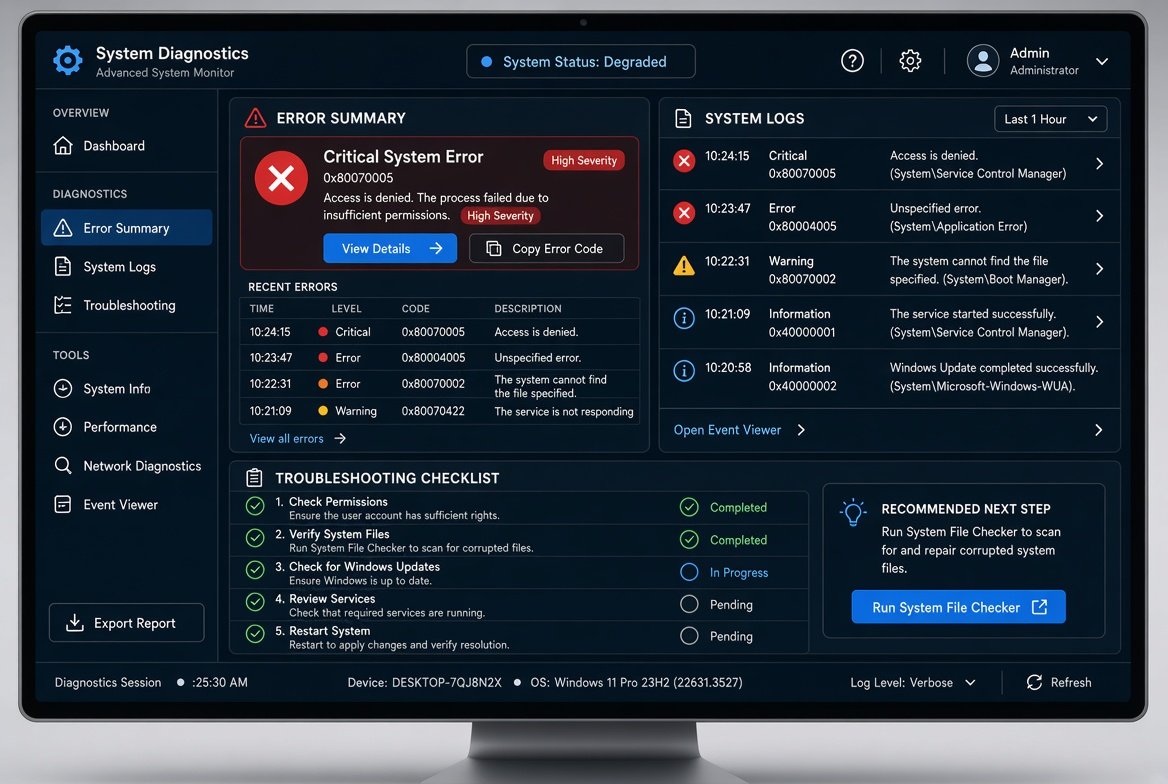
When a system suddenly stops working and shows a strange code on the screen, the first reaction is usually frustration. If you work with HCS 411GITS, those codes are actually helpful messages. They tell you exactly where the problem is so you can fix it faster instead of guessing.
This guide explains the most common HCS 411GITS error codes in simple language. You will learn what each code usually means, the typical causes, and clear steps you can take to resolve the issue. The goal is to help you get the system back online with minimum downtime.
What Are HCS 411GITS Error Codes?
HCS 411GITS error codes appear when the software and hardware are not communicating the way they should. These codes can show up during startup, configuration changes, authentication attempts, or regular operation. Most codes follow a simple pattern that includes a letter or number combination plus a short description of the problem area (such as AUTH, CFG, or NET).
Understanding the code is the first and most important step. Once you know the category, you can focus your troubleshooting in the right place instead of checking everything at random.
How to Read HCS 411GITS Error Codes
Before looking at individual codes, it helps to understand the basic structure. Many messages include:
- A code number or alphanumeric value (for example E101 or W207)
- A severity level (Error, Warning, or Info)
- A subsystem hint such as AUTH, CFG, IO, or NET
This structure makes it easier to narrow down the problem quickly. Always note the exact code and the time it appeared. Checking system logs around that timestamp often gives extra useful details.
Common HCS 411GITS Error Codes and How to Fix Them
Below are some of the most frequently reported codes along with practical fixes. Even if your exact code number is slightly different, the symptoms and solutions often match closely.
E101 Authentication Failed (AUTH)
Typical causes:
- Expired API token or password
- Clock difference between systems causing signature mismatch
- Wrong realm or tenant settings in the configuration
Fix steps:
- Refresh or rotate the credentials
- Check system time and sync it with NTP if needed (keep drift under 60 seconds)
- Verify the authentication endpoint and tenant ID in the configuration file
E118 Authorization Scope Denied (AUTH)
Typical causes:
- The token does not have the required scopes or roles
- A recent change in resource policy
Fix steps:
- Request or grant the missing scopes
- Reissue the token after any role change (old tokens can stay cached)
- Review the resource policy for any deny rules
E201 Configuration Missing or Invalid (CFG)
Typical causes:
- Missing required configuration values
- Incorrect syntax in config or YAML files
- Outdated or partially applied settings
Fix steps:
- Compare the current configuration with a known working version
- Check for missing commas, wrong indentation, or typing errors
- Reload the configuration and restart the related service if needed
E207 Feature Flag Conflict (CFG)
Typical causes:
- Two mutually exclusive feature flags turned on at the same time
- Stale remote settings still active locally
Fix steps:
- Review the feature flag matrix and turn off conflicting options
- Pull the latest remote configuration and force a full refresh
E301 Network Unreachable (NET)
Typical causes:
- Network cable or connection issue
- Firewall or security group blocking traffic
- Wrong IP address or DNS problem
Fix steps:
- Check physical connections and network status
- Test basic connectivity (ping or traceroute)
- Review firewall rules and security groups
General Troubleshooting Process for HCS 411GITS
When a new error appears, follow a consistent process instead of jumping between random checks:
- Write down the exact error code and the time it occurred
- Check system, service, and audit logs around that timestamp
- Change only one thing at a time so you know what fixed the issue
- After applying a fix, clear caches if needed, restart the service, and monitor the system
- Document the solution for future reference
This method saves time and reduces the chance of introducing new problems while trying to solve the original one.
When Hardware Issues Cause Software Errors
Not every HCS 411GITS error is caused by software. In many environments, physical problems trigger software-level codes. Common examples include:
- Power supply voltage problems leading to power-related codes
- Damaged or poorly shielded network cables causing timeout errors
- Sensor calibration drift producing I/O errors
Always inspect physical connections, power stability, and hardware status before spending long hours adjusting software settings. A loose cable or unstable power source can create error codes that look like complex software failures.
Best Practices to Reduce Future Errors
Prevention is better than repeated troubleshooting. These simple habits help keep HCS 411GITS running more smoothly:
- Keep software, firmware, and dependencies updated
- Monitor logs regularly for early warning signs
- Maintain clean and well-documented configuration files
- Limit unnecessary background services
- Test configuration changes in a safe environment before applying them to production
Teams that treat configuration management and monitoring as ongoing tasks usually experience fewer unexpected outages. If you are also working on improving overall system reliability, you may find related guidance useful in our article on how to improve software HCS 411GITS.
Secure development practices also play an important role in reducing certain classes of errors. Practical training such as the RCSDASSK program can help teams build stronger habits around authentication, validation, and safe configuration handling.
Final Thoughts
HCS 411GITS error codes are not random obstacles. They are structured messages designed to point you toward the real problem. By learning the most common codes, following a clear troubleshooting process, and combining software checks with basic hardware inspection, most issues can be resolved efficiently.
Keep a simple record of the codes you encounter and the fixes that worked. Over time this personal knowledge base becomes one of the most useful tools for maintaining a stable system.