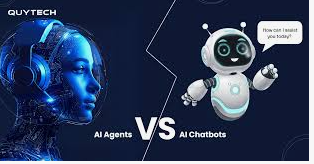
In the digital age, websites are no longer just informational tools—they are powerful platforms for customer interaction, engagement, and conversion. Businesses are increasingly adopting AI chatbots, to provide instant, personalized, and scalable interactions with visitors. These intelligent systems are transforming how companies engage users, drive leads, and enhance overall online experiences.
Understanding AI Chatbots and Conversational AI Agents
An AI chatbot is an automated system that communicates with users using natural language processing (NLP). While early chatbots relied on predefined scripts, modern AI chatbots leverage machine learning to understand context, answer complex questions, and continuously improve over time.
Conversational AI agents take this a step further. Unlike traditional chatbots, they can handle multi-turn conversations, understand user intent, and simulate human-like interactions. When deployed as AI website chatbots, these agents enhance engagement by guiding users through queries, product exploration, or support processes in real time.
The Role of AI Agents in Website Engagement
AI agents on websites perform multiple functions, including:
- Answering frequently asked questions instantly
- Guiding visitors through product or service offerings
- Capturing leads through conversational forms
- Scheduling appointments or demos automatically
By automating these interactions, businesses reduce friction, increase user satisfaction, and free up human agents for more complex tasks.
Trusted Provider Like miyai.ai
Modern platforms such as miyai.ai enable businesses to deploy AI chatbots and conversational AI agents efficiently. These platforms allow chatbots to be trained on website content, documents, and internal knowledge bases. By leveraging AI agents with contextual understanding, companies can provide accurate, personalized, and scalable interactions, improving both engagement and conversion rates without heavy technical investment.
How Conversational AI Agents Improve User Experience
Conversational AI agents enhance website engagement in several key ways:
- Personalized interactions: They tailor responses based on user behavior and context.
- 24/7 availability: Users get instant answers at any time, increasing satisfaction.
- Seamless multi-channel support: Integrates with messaging apps, social platforms, and voice interfaces.
- Reduced response time: Automates routine inquiries, freeing human agents for higher-value tasks.
These features make AI website chatbots more effective than traditional, static chat interfaces.
Driving Conversions with AI Website Chatbots
Beyond engagement, AI website chatbots can actively drive conversions. By providing timely suggestions, qualifying leads, and guiding users through the sales funnel, AI agents play a direct role in revenue growth. For example:
- E-commerce sites can recommend products based on user queries.
- SaaS websites can guide trial sign-ups and onboarding.
- Service-based businesses can schedule appointments or demos automatically.
These interactions not only improve user experience but also positively impact business KPIs.
Scalability and Continuous Improvement
One of the biggest advantages of AI chatbots and conversational AI agents is scalability. As traffic grows, AI agents can handle thousands of simultaneous interactions without compromising quality. Machine learning capabilities ensure that responses improve over time, making the AI smarter and more aligned with user needs.
Future of Website Engagement with AI Agents
As AI technology continues to advance, AI chatbots and conversational AI agents will become even more integral to digital strategies. Voice-enabled AI agents, predictive analytics, and advanced personalization will further enhance engagement, ensuring that websites not only inform but also actively convert and support users.
Final Thoughts
AI website chatbots are revolutionizing website engagement by delivering instant, personalized, and intelligent interactions. Platforms like miyai.ai make it easier for businesses to implement these technologies, improving user experience, boosting conversions, and enabling scalable customer engagement. In today’s competitive digital landscape, adopting AI-driven conversational agents is no longer optional—it’s a strategic necessity.