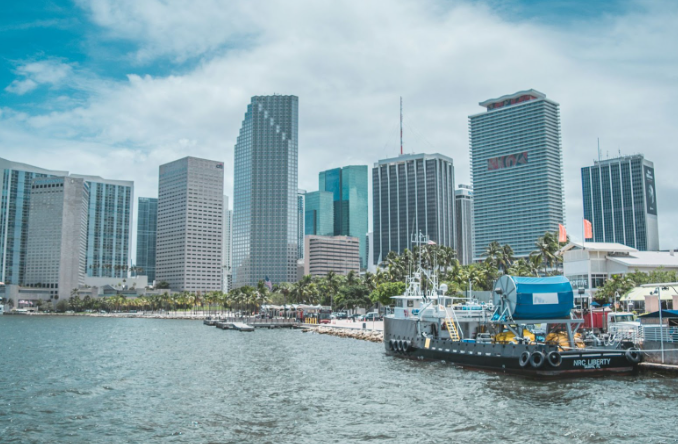
Brickell at 6 PM on a Tuesday is something to experience. The Metromover overhead, delivery trucks double-parked, pedestrians cutting across mid-block, and three lanes of cars inching toward the I-95 ramp while someone in a rental sedan tries to figure out where the parking garage entrance went. Miami doesn’t drive slowly and it doesn’t forgive distraction. That’s not an exaggeration – it’s just what daily driving here looks like.
Miami-Dade County averaged around 165 crashes every single day over the past five years. In 2024 alone, the county recorded nearly 60,000 total crashes, 284 fatalities, and over 29,000 injuries. Hit-and-run crashes topped 19,000 in that same year. These numbers come directly from Florida Highway Safety and Motor Vehicles crash data, and they represent the road environment that drivers navigating car insurance in Miami are dealing with every day.
Urban Driving Challenges That Influence Insurance Needs in Miami
Heavy Traffic Congestion in Central Districts
The Dolphin Expressway – SR-836 – is one of the most crash-dense roads in the state. I-95 through Little River has been identified as the single most dangerous stretch of road in all of Florida, with 7.01 fatalities per mile. These aren’t fringe roads that most people avoid. They’re main arteries that a large portion of Miami’s working population sits on every weekday morning and evening.
Dense traffic does something specific to accident patterns. It creates more contact opportunities at lower speeds – rear-end collisions at 15 miles per hour, side-swipes during lane changes, intersection conflicts when a yellow light gets pushed. These incidents don’t always end in major injury, but they generate insurance claims regularly. Miami-Dade accounts for roughly 15% of all crashes in Florida, from a single county out of 67. That concentration is what shapes the insurance market here, and it’s why coverage decisions carry more practical weight in this city than they might elsewhere.
Parking Limitations in Dense Neighborhoods
Wynwood, Little Havana, South Beach, Coconut Grove – parking in these neighborhoods is genuinely difficult. Street spots are scarce, garages fill early, and vehicles often end up in spots that carry risk they didn’t look like at first glance. Side mirrors clipped by passing traffic, doors dinged in tight garage rows, vehicles blocked in and bumped during maneuvering – minor damage that doesn’t always result in a police report or an identifiable other driver.
Vehicle break-ins are a separate issue in parts of Miami. Certain neighborhoods see higher rates of smash-and-grab incidents and catalytic converter theft than others. These aren’t random events. They’re predictable based on location, parking situation, and time of day. Comprehensive coverage is what applies in these situations – theft, vandalism, hit-and-run damage where no responsible party can be identified. Drivers who’ve removed comprehensive to save on monthly costs sometimes find that calculation changes after the first incident.
Frequent Stop-and-Go Driving Conditions
Miami traffic doesn’t move at consistent speed. It lurches. US-1 through Coral Gables, Biscayne Boulevard through Edgewater, Calle Ocho through Little Havana – all of these corridors spend significant portions of the day in stop-and-go patterns that demand constant attention and produce rear-end incidents at a higher rate than free-flowing roads.
Stop-and-go driving is also hard on vehicles mechanically. Braking frequency, transmission cycling, and cooling system demand all increase in this environment, which contributes to breakdown rates that are higher than the average for less congested cities. Roadside assistance coverage that gets treated as a low-priority add-on becomes considerably more relevant when a vehicle breaks down on a busy Miami surface street during afternoon congestion.
Exposure to Coastal Weather Patterns
Miami sits on the edge of Biscayne Bay, fully exposed to the Atlantic weather pattern. Summer afternoons bring storms that arrive fast – 20 minutes from clear sky to standing water on Brickell Avenue is not unusual. Flash flooding on low-lying roads closes streets in neighborhoods that locals know to avoid during heavy rain but that catch out-of-town drivers every season.
Hurricane season is the bigger structural concern. June through November, every year. The storm that actually makes landfall near Miami may be rare in any given year, but the preparation reality – relocating vehicles, dealing with flooding from near misses, handling storm surge in coastal neighborhoods – is part of life here. Comprehensive coverage handles weather-related vehicle damage. Without it, a flooded car after a tropical system passes close enough to drop serious rain is entirely a personal financial problem.
How Lifestyle and Commuting Patterns Shape Insurance Decisions in Miami
Daily Commuting Distances
Miami’s geography concentrates jobs in specific corridors – downtown, Brickell, Doral, Aventura, Coral Gables – while housing has pushed southward into Kendall, Homestead, and west into Hialeah and Doral. The result is commutes that can cover 25 to 40 miles each way through some of the state’s heaviest traffic. Annual mileage for daily commuters in this market runs considerably higher than national averages.
Mileage is a direct input in insurance pricing for a reason. It represents real exposure. A driver putting 23,000 miles per year on I-95 and the Palmetto is accumulating statistical risk that a driver running 8,000 miles locally on lighter roads simply doesn’t share. Policies that were set during a period of lower mileage and never revisited after a job change or longer commute may be calibrated to a usage pattern that no longer exists.
Driving During Peak Tourist Seasons
Over 28 million visitors came to Miami-Dade in 2024 – a record. They rented cars. They drove on Biscayne Boulevard without knowing where they were going. They took wrong turns on the MacArthur Causeway headed toward South Beach. They drove rental vehicles they weren’t familiar with at speeds that didn’t match the traffic flow around them.
Miami locals absorb this reality seasonally. Winter months, spring break, Art Basel in December, Ultra Music Festival – there are predictable periods when the volume of unfamiliar drivers on specific roads spikes noticeably. The accident rate doesn’t drop during these periods. It does the opposite. The insurance market prices for this environment year-round, but the actual risk for any individual driver does concentrate during peak tourist influx.
Vehicle Usage for Work or Business
A significant portion of Miami’s workforce uses personal vehicles for work beyond just commuting. Real estate agents driving clients through neighborhoods in Coral Gables or Coconut Grove, contractors moving between job sites in Miami Gardens and Hialeah, freelancers doing runs between co-working spaces in Wynwood and meetings in Brickell – personal vehicles doing work-related miles every day.
Standard personal auto policies typically exclude commercial use. The line between “commuting” and “using my vehicle for work purposes” matters to an insurer when a claim comes in and they review how the vehicle was being used at the time. Drivers who regularly use their personal vehicle for client-related driving, deliveries, or any work function beyond the standard point-A-to-point-B commute have a coverage question worth getting a clear answer on before a claim surfaces it.
Weekend Recreational Driving Patterns
Miami’s weekend driving has its own character. The causeway traffic heading to Miami Beach on Saturday afternoons, the late-night movement around Wynwood and the Design District after midnight, the Homestead-to-Keys run on Sunday mornings for drivers heading to the Florida Keys via US-1 through Card Sound Road. These are patterns that create very specific risk environments – high-density pleasure driving during periods when impaired driving incidents are statistically more common.
The broader car insurance Florida reflects this kind of driving environment statewide, but Miami concentrates it. Weekend nighttime driving in particular intersects with the hit-and-run problem that’s well-documented in Miami-Dade data. Uninsured motorist coverage is what applies when a driver is struck and the at-fault party disappears. In a county that recorded over 19,000 hit-and-run crashes in a single year, that coverage does real work.
Reasons Miami Drivers Review Their Insurance Policies
Relocating Within the City
Moving from Kendall to Edgewater is not just an address change. It’s a complete shift in driving environment – from suburban surface roads with relatively predictable patterns to dense urban blocks, valet-only parking, and streets where lane discipline is more suggestion than practice. Insurance risk profiles change with location, and insurers price by zip code specifically because those differences are measurable and real.
A driver moving from a quieter part of the county into a higher-density neighborhood may see their premium shift at renewal even with no change in their driving behavior. Understanding why that shift happens, and confirming the new policy reflects the actual situation, is the practical reason a move prompts a coverage review – not just updating the address on a form.
Changes in Employment or Commute
Taking a new job 15 miles farther from home doubles the highway exposure. Switching to remote work eliminates most of it. Both changes have real implications for what a policy should look like. The driver who went remote and is now logging 6,000 miles a year instead of 18,000 has legitimate room to revisit their coverage structure and cost. The driver who added a longer commute on the Palmetto Expressway hasn’t.
Employment changes in Miami happen at a pace that matches the city’s general dynamism – people shift industries, take on freelance work, change which office they report to. Each shift is a natural checkpoint for confirming that the stated vehicle usage on a policy still reflects how the vehicle is actually being used. The gap between stated and actual usage matters at claim time.
Vehicle Replacement Decisions
Trading in a 2015 sedan for a 2023 SUV is not a neutral event from an insurance standpoint. The newer vehicle has a higher replacement value, more complex repair requirements, and typically requires comprehensive and collision if financed. The premium will reflect all of that. Going in the other direction – upgrading from a financed vehicle to owning an older paid-off one outright – removes the lender’s coverage requirements and gives the driver more structural flexibility.
The vehicle value question is worth running explicitly. A car worth $9,000 carrying collision coverage with a $1,000 deductible has a maximum net claim ceiling of $8,000 in a total loss – and considerably less in minor damage scenarios where the deductible absorbs most of the repair cost. Whether that math supports maintaining full collision coverage is a calculation, not an assumption.
Adjusting Financial Protection Levels
Insurance is a financial tool, and Miami’s cost of living creates real budget pressure on a lot of residents. The impulse to reduce insurance costs when other expenses climb is understandable. The question is which adjustments are structurally sound and which ones just create delayed costs.
Raising a deductible to lower the monthly premium is a structural adjustment – it shifts the risk threshold without removing a coverage category. Dropping uninsured motorist coverage in a county with 19,000 hit-and-runs annually is a different kind of decision entirely. One adjusts cost intelligently. The other removes protection against one of the most common types of incidents that Miami drivers actually face. Telling the difference between those two options is the core of making insurance decisions that hold up when they’re eventually tested.