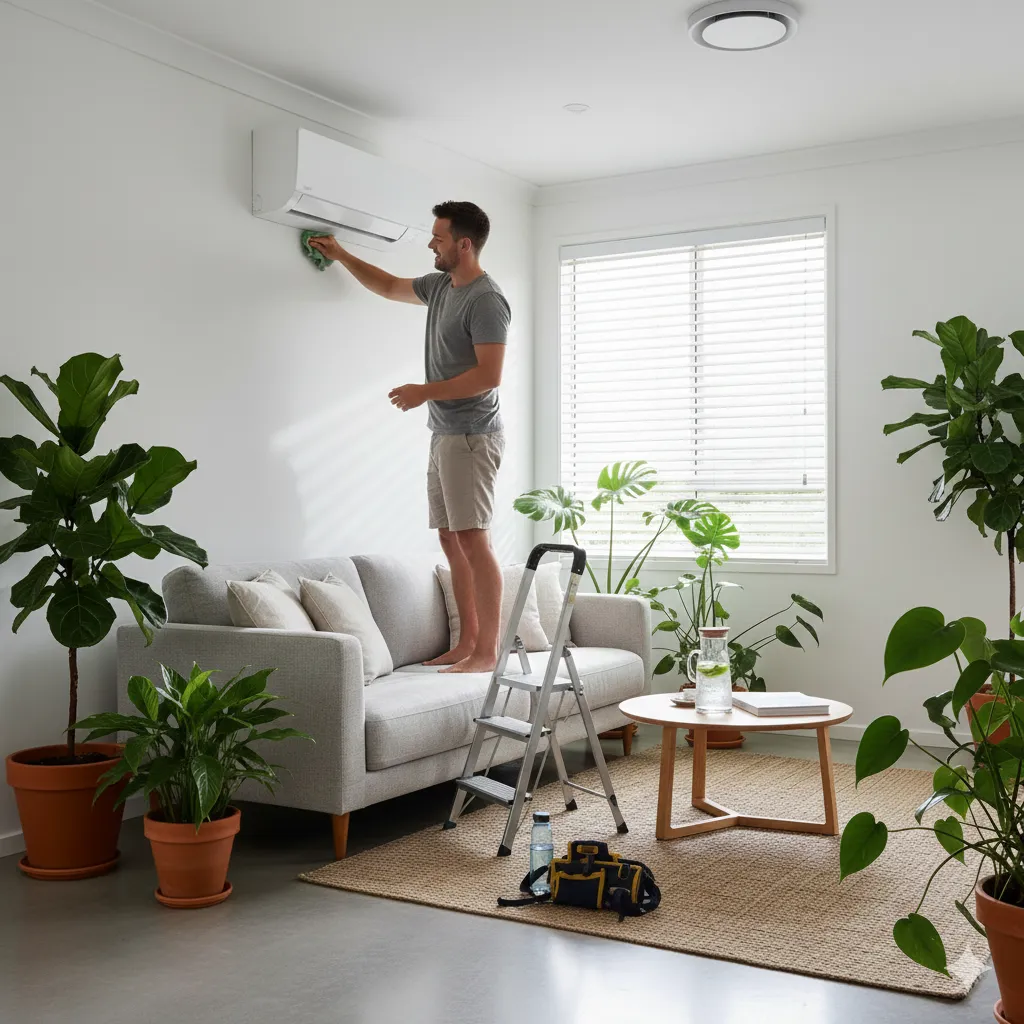
Body: When the weather heats up, most of us rely on our cooling systems to keep our homes comfortable. It’s easy to switch on the air conditioner and forget about it, but a few quick checks around the house can make a big difference in how well your system performs. A little maintenance can improve airflow, reduce energy use and extend the life of your unit. This becomes even more helpful if you’re planning future upgrades using support programs like the Victorian Energy Rebate, which encourage households to switch to more efficient systems.
You don’t need to be an expert to keep your cooling system running well. Most of the steps below take only a few minutes and require little to no tools. When you stay consistent with these checks, your air conditioner cools faster, uses less power and keeps your home more comfortable through the season.



Let’s go through the simplest and most effective things you can do.
1. Start with your air filters
The filter is one of the most important parts of your cooling system. It traps dust, hair and allergens so your indoor air stays clean. But once the filter collects too much dirt, airflow becomes restricted. This forces the unit to work harder and use more electricity.
- How to check it: Open the front panel of your indoor unit. You should find the filter right away. Hold it up to the light. If you can’t see through it, it’s time for a clean.
- How to clean it: Rinse the filter gently under running water. Let it dry completely before putting it back. Avoid using strong chemicals or scrubbing too hard. Most filters need cleaning every two to four weeks during summer.
- Why it matters: Clean filters help your system cool faster and reduce strain on the motor. This can extend the life of your unit and keep your energy bills lower.
2. Check for blocked vents and poor airflow
Good airflow is necessary for efficient cooling. Even the best air conditioner struggles when the air can’t circulate properly.
Look for these issues:
• Furniture blocking vents
• Curtains covering the indoor unit
• Dirty return air grilles
• Clogged outdoor vents
• Closed doors in rooms that should be open for better circulation
What to do:
Move furniture a few inches away from vents. Keep the area around the indoor and outdoor units clear. Wipe vents with a soft cloth to remove dust. Small changes like these help the cool air spread throughout your home more evenly.
3. Keep windows and doors sealed
Cool air escapes quickly from gaps, cracks or poorly sealed windows. When this happens, your system works harder than necessary.
Quick checks:
• Do doors close properly?
• Do windows have gaps around the frame?
• Can you feel warm air entering near the edges?
Weather strips, door snakes and simple sealing tapes are affordable fixes that you can apply in minutes. These small details reduce heat entry and help the room stay cool for longer.


4. Check your thermostat settings
Many people accidentally use their air conditioner in a way that wastes energy without improving comfort.
- Ideal temperature: A setting around 24 to 26 degrees usually works well. Lower settings don’t cool the room faster; they just make the unit work harder.
- Position of the thermostat: If your thermostat sits near a hot appliance or in direct sunlight, it will read the temperature incorrectly. This may cause the unit to run longer than needed.
- Fan mode vs auto mode: Using “auto” allows the system to adjust the fan speed efficiently. “Fan only” mode can be helpful for air circulation when cooling isn’t required.
5. Inspect the outdoor unit
Your outdoor unit needs enough space and fresh air to work properly. If it’s blocked by debris or plants, heat can’t escape efficiently.
Check the following:
• Leaves, branches or dust buildup
• Plants growing too close
• Items stored near the unit
• Pet hair or cobwebs around the vents
Clear at least half a metre of space around the outdoor unit. A gentle brush or soft cloth can remove dirt from the outer surface. Avoid opening the unit itself unless you’re trained or hiring a professional.
6. Reduce indoor heat sources
Your cooling system works harder when extra heat builds up inside the home.
Common heat sources to reduce:
• Ovens, stoves and irons
• Long hot showers
• Large electronics like gaming consoles or old TVs
• Lamps with hot bulbs
• Running multiple appliances at once
Simple changes help: cook earlier or later in the day, switch off unused electronics and use exhaust fans in the kitchen or bathroom. You’ll feel the difference quickly.
7. Check your curtains and blinds
Sunlight increases indoor temperature faster than most people realise. Even one window facing direct sunlight can heat the entire room.
What to look at:
• Do you close blinds in the morning?
• Are some windows getting afternoon sun?
• Do you have light coloured or reflective blinds?
• Are curtains thick enough to block heat?
When your home stays cooler naturally, your air conditioner doesn’t need to work as hard. This leads to more consistent performance and lower energy use.
8. Look at your home’s insulation
Insulation helps trap cool air inside and prevents hot outdoor air from reaching your rooms.
Simple checks:
• Does the roof feel very hot in the day?
• Do rooms warm up quickly even after cooling?
• Are some rooms more affected by heat than others?
If insulation is old or thin, cool air escapes quickly. While upgrading insulation is a bigger project, it’s one of the most effective ways to improve overall cooling efficiency. Many households pair insulation improvements with system upgrades through programs such as the Victorian Energy Rebate or the air conditioner rebate in Victoria.
9. Clean around the indoor unit
Dust settles around the unit and can get pulled inside during operation.
Quick tasks:
• Wipe the top and sides of the indoor unit
• Remove cobwebs nearby
• Check for dust on the wall around the vents
A cleaner unit runs more smoothly and reduces irritants in the air, which is especially helpful for people with allergies.
10. Avoid cooling empty rooms
Cooling unused spaces wastes energy and slows down performance.
What to do:
• Close doors to rooms you don’t need
• Turn off the unit when leaving the house
• Use zoning options if your system supports them
Most modern split systems cool a room quickly, so you don’t need to leave the unit running for hours when you’re not home.
11. Assess whether your unit is the right size
A unit that’s too small never fully cools the room. A unit that’s too big uses more energy than needed.
Signs your unit might be undersized:
• Takes a long time to cool
• Struggles on hot afternoons
• Needs to run continuously
Signs it may be oversized:
• Short, frequent cycles
• Uneven cooling
• Higher than expected energy bills
If you suspect your unit isn’t the right size, an upgrade may be worth considering. Support programs like the Victorian Energy Rebate or the air conditioner rebate in Victoria can help reduce the upfront cost of switching to a better system.
12. Look for signs of wear or damage
Even small issues can affect efficiency.
Look out for:
• Strange noises
• Weird smells
• Water leaks
• Reduced cooling power
• Frequent on-off cycles
These may indicate low gas, electrical faults or blocked drainage. A professional service can diagnose and fix the issue quickly.
13. Consider a yearly professional service
Even if your system seems fine, an annual service helps maintain performance. Professionals check gas levels, deep clean internal parts and inspect electrical connections.
A well-serviced unit cools better, lasts longer and uses less energy. If your system is more than five years old, regular servicing becomes even more important.
14. Think about long-term upgrades
If your cooling system is old, noisy or expensive to run, upgrading can be a smart long-term decision. Modern split systems cool faster, use less power and provide more stable performance.
You may be eligible for programs such as the Victorian Energy Rebate or the air conditioner rebate in Victoria, which support households moving to more efficient systems. These programs reduce the upfront cost and help you invest in a model that saves money over time.
Final thoughts
Keeping your cooling system running efficiently doesn’t require complicated skills or expensive tools. Simple checks like cleaning filters, sealing gaps, clearing vents and managing sunlight can improve comfort and reduce strain on your unit. These habits also help your air conditioner last longer and keep energy costs under control.
If your system is older or not performing well even after these checks, it may be time to consider an upgrade. Programs available in Victoria make this more affordable and help households move toward better cooling solutions.