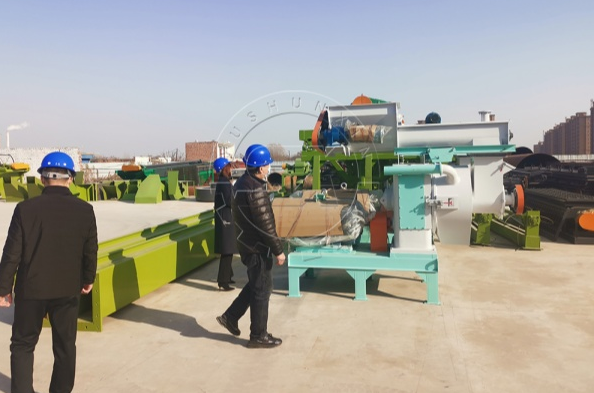
Agriculture continues to rely on high-quality fertilizers to boost crop yield, enhance soil fertility, and ensure sustainable farming practices. Modern fertilizer production technologies, such as phosphate granulation equipment and extruder machines, have revolutionized the industry by enabling efficient, large-scale, and uniform fertilizer manufacturing. These machines allow manufacturers to produce compound fertilizers like NPK granules and phosphate-rich products with high precision and minimal waste.
This article explores how phosphate granulation equipment and extruder machines work, their benefits, and why they are essential for modern fertilizer manufacturing, particularly in Pakistan and other agricultural markets.
What Is Phosphate Granulation Equipment?
Phosphate granulation equipment is used to convert fine phosphate powders or other raw materials into uniform granules suitable for agricultural use. Phosphorus is a critical nutrient for plants, aiding root development, flowering, and fruiting. Granulated phosphate fertilizers are easier to handle, store, and apply compared to powder forms, making granulation equipment an indispensable part of fertilizer production.
How It Works
- Raw Material Preparation
Phosphate rock or powdered phosphate is crushed, dried, and screened to remove impurities. - Granulation Process
The prepared material is fed into a granulation machine, often with binders like bentonite or lime, forming uniform granules. - Drying and Cooling
Granules are dried to reduce moisture content and cooled to stabilize their structure. - Screening and Packaging
Granules are sorted by size, and oversized or undersized particles are recycled into the granulation process.
Using phosphate granulation equipment ensures high-quality, dust-free, and easily transportable fertilizer granules that improve crop nutrient absorption.
Extruder Machine for Sale in Pakistan
An extruder machine is a versatile piece of fertilizer production equipment used to produce NPK compound fertilizers. The extruder machine blends raw materials and compresses them into uniform granules through mechanical extrusion, offering an efficient solution for industrial-scale fertilizer production.
Key Features
- Uniform Granule Production
Extruder machines produce granules of consistent size, density, and nutrient distribution. - High Efficiency
Continuous operation allows for large-scale production with minimal downtime. - Versatility
Can process various raw materials including urea, ammonium phosphate, potassium chloride, and lime. - Cost-Effective
Reduces labor requirements, minimizes material waste, and improves energy efficiency. - Customizable Output
Operators can adjust granule size and shape to meet specific agricultural needs or market demand.
In Pakistan, where agricultural production is rapidly growing, investing in an extruder machine allows fertilizer manufacturers to meet domestic and regional demand efficiently.
Advantages of Using Phosphate Granulation Equipment and Extruder Machines
1. Enhanced Production Efficiency
Both phosphate granulation equipment and extruder machines enable continuous or semi-continuous operation, significantly increasing fertilizer production rates compared to traditional batch methods.
2. Consistent Product Quality
Controlled granulation processes ensure uniform granules with proper nutrient content, which improves crop absorption and reduces wastage during application.
3. Cost Savings
Automation and optimized production processes reduce labor, energy consumption, and raw material loss, enhancing overall profitability.
4. Environmental Sustainability
Modern fertilizer machines reduce dust, emissions, and waste, supporting eco-friendly agricultural practices.
5. Versatility
These systems can handle a variety of raw materials, enabling manufacturers to produce multiple fertilizer types, including NPK, phosphate-based fertilizers, and soil amendments.
Applications in Agriculture
Fertilizer granules produced with phosphate granulation equipment and extruder machines are widely used in:
- Cereal and Row Crops: Wheat, corn, rice, and soybeans benefit from balanced nutrients in granulated fertilizers.
- Horticulture: NPK and phosphate fertilizers support vegetables, fruits, and ornamental crops.
- Soil Improvement: Granulated phosphate fertilizers enhance soil fertility and nutrient availability.
- Specialized Fertilizers: Custom granules tailored for specific crops, soil types, or growth stages.
By producing uniform and nutrient-rich granules, manufacturers help farmers improve yield, quality, and overall farm profitability.
Choosing the Right Equipment
When considering phosphate granulation equipment or an extruder machine for sale in Pakistan, keep these factors in mind:
- Production Capacity
Match the machine’s output to your business scale and market demand. - Raw Material Availability
Ensure reliable access to phosphate rock, urea, potassium sources, or other inputs. - Automation Level
Automated systems reduce labor costs and improve efficiency. - Customization Options
Look for machines that allow control over granule size, shape, and nutrient ratios. - Manufacturer Support
Suppliers offering installation, training, and after-sales service ensure long-term operational efficiency.
Selecting reliable, high-quality equipment ensures consistent production, high-quality fertilizer, and sustained profitability.
Conclusion
Investing in phosphate granulation equipment and an extruder machine for sale in pakistan provides fertilizer manufacturers with modern, efficient, and sustainable solutions for producing high-quality granules. Phosphate granulation equipment ensures dust-free, uniform phosphate-rich fertilizer, while extruder machines allow large-scale NPK production with precise nutrient distribution.
By adopting these advanced technologies, manufacturers can improve production efficiency, reduce labor and energy costs, and deliver consistent, high-quality fertilizers that support modern agriculture. These systems not only meet growing domestic demand in Pakistan but also enable manufacturers to compete in regional and global markets, ensuring long-term business success.