
Yes, one lawn mower robot can manage both front and back lawns when the property layout, access path, and mowing schedule are set up correctly. The key question is not simply mower capacity, but whether both areas are connected in a way the robot can travel safely and efficiently. Some homes allow automatic movement between lawns through a defined route, while others require manual relocation. Mapping, zoning, and charging time also affect how well one unit handles the full job. Understanding those factors helps you decide whether sharing one mower is practical for your yard.
Connected or Separate Lawns Require Different Setups
A Clear Connecting Route Supports Automatic Travel
If your front and back lawns connect through a side yard, gate opening, or paved passage, one lawn mower robot can usually travel between them automatically. The route must be wide enough, free of frequent obstacles, and safe from traffic, loose gravel, or steps that interrupt movement. A mapped corridor helps the mower leave one area, reach the next, and resume cutting without confusion. This setup works best when both lawns belong to the same continuous property boundary and the mower can navigate the transfer point reliably every day. When the connection stays consistent, the robot can cover both spaces with less manual effort and a more predictable mowing cycle.
Disconnected Lawns Require Planned Relocation
When the front and back lawns have no usable connection, one mower can still maintain both areas, but you will need a relocation routine. That usually means carrying or rolling the mower from one lawn to the other, then selecting the correct map or mowing zone in the app. This approach is practical for homes with separated entrances, fenced divisions, steps, or driveways that the mower should not cross alone. You also need to consider charging access, since the mower cannot return automatically to a dock placed in another isolated section. A planned relocation schedule keeps the process manageable and prevents missed cuts, uneven growth, or wasted battery time between mowing sessions.
What Helps One Mower Manage Both Areas?
Maps and Zones Keep Each Lawn Organized
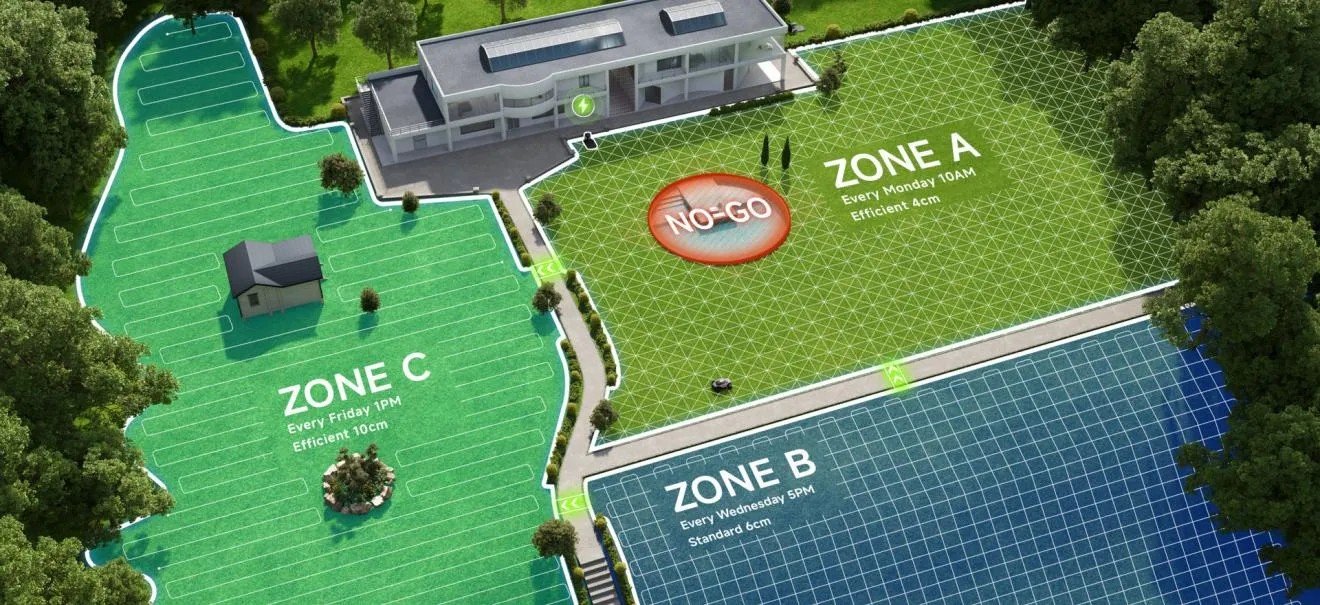
Mapping and zone control make shared mowing much easier because the robot can treat the front and back lawns as distinct work areas. Instead of wandering across the whole property, it follows defined boundaries, assigned sections, and planned routes. The MOVA Lidax Ultra 3000 AWD Robotic Lawn Mower supports dual maps and up to 150 zones through the app, which is useful for properties with separate lawn layouts, narrow passages, or multiple mowing priorities. Its 36V battery supports consistent mowing performance on up to 0.75 acres, giving one machine enough coverage for many combined front-and-back setups. Organized digital mapping reduces overlap, missed strips, and unnecessary travel between areas.
Scheduling Allocates Time Where Grass Needs It
A good schedule lets one robot mower divide attention between the front and back lawns without letting either area get overgrown. If the backyard grows faster because of irrigation, shade, or heavier use, you can assign it more mowing time while still giving the front lawn regular maintenance. This is where zone-based scheduling becomes especially useful, since each area can receive its own frequency and run window. Thoughtful timing also helps avoid conflicts with parked cars, foot traffic, pets, or playtime. Rather than expecting one long mowing session to cover everything at once, a staggered plan keeps both lawns neat through shorter, more efficient visits.
Check Whether Sharing One Mower Fits Your Routine
Assess Total Workload and Charging Needs
Before relying on one mower for both lawns, add up the total mowing area and compare it with the machine’s realistic daily workload. A robot may technically cover your square footage, but the result still depends on how often it must recharge and how much travel time it spends moving between sections. Larger combined lawns need a schedule that leaves enough runtime for actual cutting, not just navigation. You should also think about seasonal growth spikes, since spring and early summer often demand more frequent mowing. When charging cycles and lawn size stay in balance, one mower can maintain both areas consistently instead of falling behind and creating patchy results.
Run a Complete Front-and-Back Trial
The best way to confirm that one mower can handle both lawns is to test the full routine before depending on it long term. Map both areas, set the travel route or relocation process, and run several days of scheduled mowing under normal conditions. Watch for missed edges, battery shortfalls, blocked passages, or delays caused by gates, furniture, or driveway activity. A trial also shows whether the front lawn stays presentable while the backyard receives enough attention, or whether the schedule needs adjustment. After a complete test, you can judge the setup based on actual performance rather than assumptions and decide whether one mower truly fits your property.
Conclusion
One lawn mower robot can manage front and back lawns effectively when the setup matches the property. Connected lawns benefit from a safe, dependable travel route, while disconnected lawns need a simple relocation plan and clear scheduling. Mapping, zoning, and balanced runtime are what make one machine practical across two areas. If the total lawn size fits the mower’s capacity and charging pattern, sharing a single unit can save effort without sacrificing lawn quality. The smartest approach is to test both areas together, confirm the mower can keep up, and then fine-tune the schedule for consistent results.