Ask most international travellers to name Australia’s must-see destinations and you’ll hear the same answers: Sydney, the Great Barrier Reef, Uluru. Tasmania rarely makes the list. That’s a mistake — and one that experienced travellers are quietly correcting.
Tasmania is a world unto itself. Separated from mainland Australia by the Bass Strait, this island state offers something increasingly rare in modern travel: genuine wilderness, an extraordinary food culture, and a pace of life that feels nothing like the cities to the north. Here’s why it deserves a spot at the top of your itinerary.
A Landscape That Stops You in Your Tracks
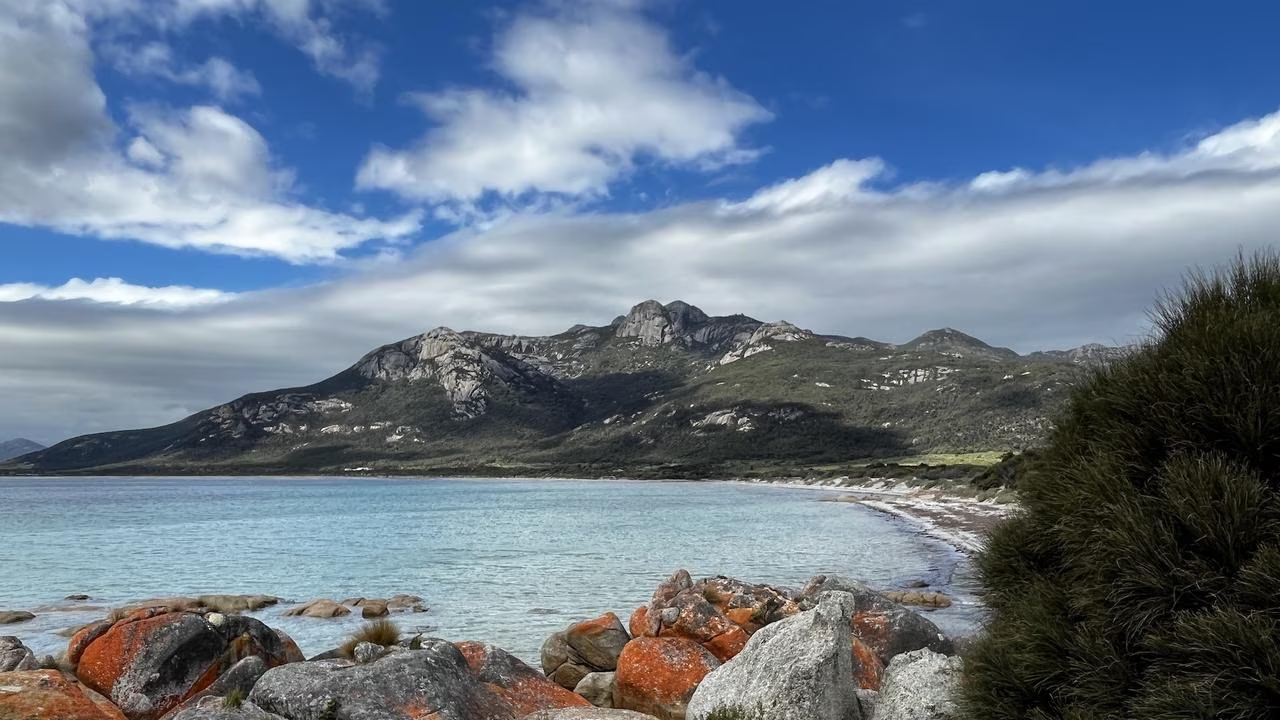
Nearly half of Tasmania is protected as national park or World Heritage Area — a statistic that becomes viscerally real the moment you set foot outside Hobart. The state’s east coast is lined with some of the world’s most photographed beaches: Wineglass Bay, a perfect horseshoe of white sand and turquoise water, consistently ranks among the planet’s finest. The Bay of Fires blazes with orange lichen-covered boulders against crystal-clear ocean. Cradle Mountain rises from ancient rainforest in the island’s northwest, its reflection shimmering in Dove Lake on still mornings.
These aren’t just pretty photographs. They’re places where you can be genuinely, completely alone — something that’s becoming increasingly difficult to find anywhere in the world.
Food and Wine That Punches Far Above Its Weight
Tasmania’s food scene has undergone a quiet revolution over the past two decades. The island’s cool climate, clean air, and pristine waters produce ingredients of exceptional quality: Pacific oysters harvested straight from protected bays, Atlantic salmon raised in cold southern waters, heritage-breed beef grazed on lush Midlands pasture, truffles that rival Périgord, and cool-climate wines — particularly Pinot Noir and sparkling varieties — that are attracting serious international attention.
The Coal River Valley, just 30 minutes east of Hobart, has emerged as Tasmania’s premier wine region. Wineries like Pooley Wines and Frogmore Creek produce single-vineyard expressions that rival anything from the Yarra Valley or Marlborough. The Huon Valley to the south is known for apples, cider, and an emerging artisan food scene centred around producers like Willie Smith’s.
For travellers who take food seriously, this is one of the most rewarding destinations in the Southern Hemisphere.
Hobart: A Cultural Capital in a Small Package
Hobart is Tasmania’s capital and one of Australia’s most liveable cities — compact, walkable, and genuinely interesting. Salamanca Place, lined with Georgian sandstone warehouses, hosts a famous Saturday market and some of the country’s best restaurants. MONA — the Museum of Old and New Art — is one of the world’s most discussed private museums, an underground labyrinth of provocative contemporary work that draws visitors from across the globe.
The city is also the launching point for most of the island’s touring experiences. Day trips to the Huon Valley, the Derwent Valley’s Russell Falls, the Tasman Peninsula, and the east coast all depart from Hobart’s accommodation hubs.
How to Experience Tasmania Properly
The temptation with Tasmania is to drive yourself — the roads are good and the distances manageable. But the island rewards those who slow down, and the best way to slow down is with a local guide who knows where to stop, what to order, and which view is worth the detour.
Operators offering private Tasmania tours take small groups of two to seven guests through the island’s best experiences — from Coal River Valley wineries and Freycinet oyster farms to Cradle Mountain and the historic convict sites of Port Arthur. A private guide handles the logistics while you focus on the experience, and the flexibility of a small group means the itinerary can shift based on the weather, the season, and what you actually want to see.
Tasmania isn’t undiscovered — it’s just underestimated. Those who make the effort to get there tend to return, often with friends in tow. It has that effect.
When to Go
Tasmania is a year-round destination, but summer (December to February) offers the best weather for east coast beaches and Cradle Mountain. Autumn (March to May) brings extraordinary colour to the Huon Valley orchards and the vineyards of the Coal River Valley. Winter is the time for whisky, open fires, and MONA’s Dark Mofo festival. Spring sees the island’s wildflowers bloom and the waterfalls run full.
Whatever time of year you visit, Tasmania will surprise you. It always does.
Bio: A travel writer specialising in food, wine, and off-the-beaten-track destinations across Australia and New Zealand.