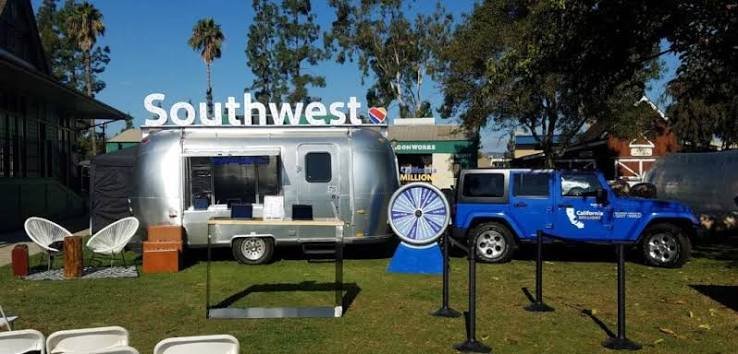
There is a version of your next marketing campaign that does not wait for consumers to find it. It drives to them, parks on their block, serves them something worth stopping for, and leaves them with a brand memory no banner ad could manufacture. Mobile marketing is not a new idea, but the brands executing it in 2026 have elevated the format into one of the highest-performing channels in their mix. Here is why wheels might be the smartest investment your next campaign makes.
Attention Is Earned on the Street, Not the Screen
Digital advertising interrupts. A well-executed food truck marketing activation invites. That distinction sounds simple, but the consumer behavior it produces is fundamentally different. A person who chooses to walk toward a branded vehicle, wait in line, and engage with an ambassador has made a series of voluntary decisions that no algorithm-optimized impression can replicate. That voluntary participation is the currency of modern brand marketing, and mobile activations are one of the few formats built to generate it consistently.
The street-level environment also removes the competition. A brand on a screen fights for attention against every other tab, notification, and sponsored post in the feed. A brand parked on the right block on a busy afternoon owns the moment completely.
The Vehicle Is the Message
A mobile marketing truck is not a delivery mechanism for a campaign. It is the campaign. The exterior design, the service experience, the culinary or product offering, the ambassador interaction: every element communicates something about the brand before a single word of copy is read.
This is why the best mobile marketing programs treat the vehicle with the same creative rigor applied to any flagship brand asset. Dimensional fabrication, brand-accurate color, thoughtful service window design, lighting that performs in every condition: these are not production details. They are brand communications. When a consumer photographs a beautifully designed branded vehicle and shares it, they are sharing the brand’s identity, not just documenting a giveaway.
Mobility Is a Strategic Advantage
A retail location is fixed. A billboard is fixed. A mobile marketing truck goes where the consumer is, which means the brand can follow its audience across neighborhoods, cities, and events rather than hoping the audience finds it.
That flexibility compounds across a campaign. A brand that deploys its vehicle at a morning commuter location, a lunchtime business district, and an evening cultural event in the same day is reaching three distinct consumer contexts with one asset. Knowing which markets to prioritize, which locations perform for specific consumer profiles, and how to sequence stops for maximum cumulative impact is where experienced production partners earn their place.
The Content Creates Itself
One of the most underappreciated advantages of food truck marketing is what it produces organically. A visually distinctive vehicle in a high-traffic location is a content event. Consumers photograph it, tag it, and share it before the brand’s own social team has posted anything. That earned media is not a side benefit of the activation. For the brands executing well, it is one of the primary campaign deliverables.
The activations that generate the most organic content are not the biggest or most expensive. They are the ones designed with the consumer’s desire to share in mind, where the experience is worth documenting because of how it looks, how it tastes, or how it made the person feel.
Wheels Work for Every Category
Food and beverage brands are the natural fit, but the mobile format performs across every category. Beauty, tech, entertainment, finance: any brand with a product worth experiencing and an audience worth reaching has a reason to put it on wheels. The format is not the point. Showing up is. And in a world where consumer attention is the scarcest resource in marketing, a brand that drives to its audience instead of waiting for them to click will always have the advantage.
The common thread is not the category. It is the insight that consumers respond differently to a brand that comes to them with something worth experiencing. Whatever your brand is selling, a well-executed mobile campaign delivers it in a way no static channel can match.
If your next campaign is still waiting for consumers to click, it might be time to give it some wheels.