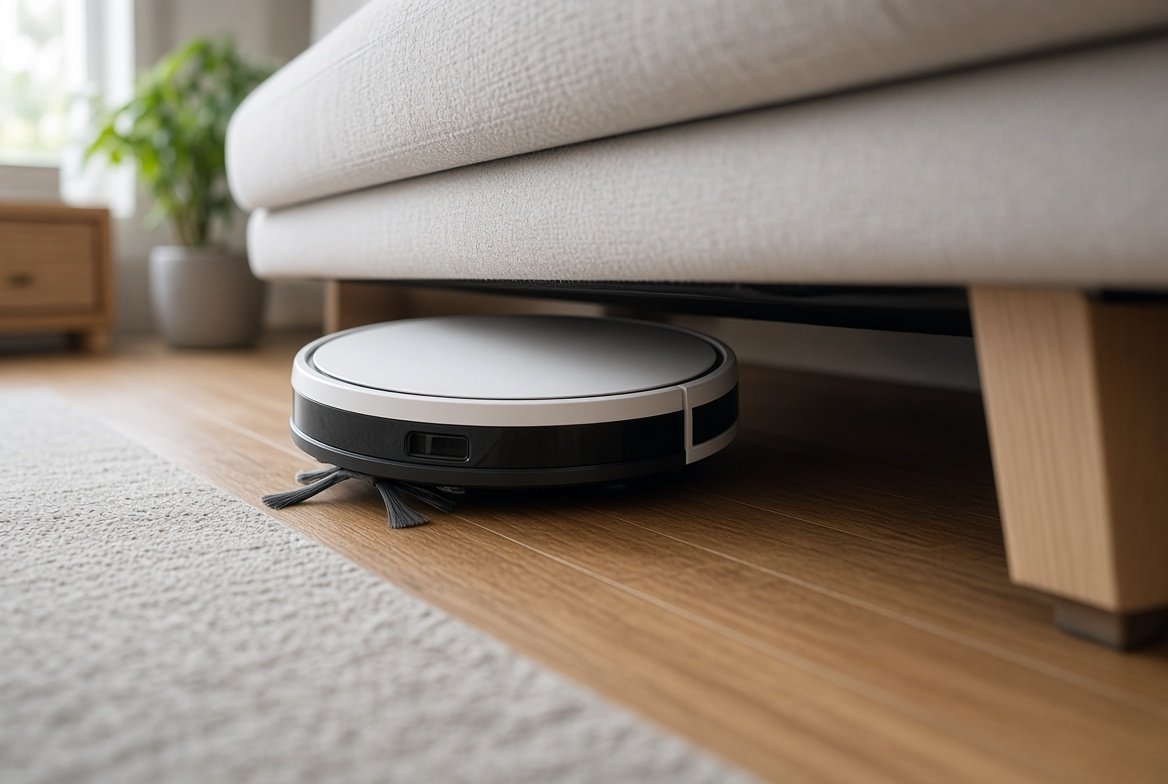
A robot vacuum and mop can clean under low furniture if it has enough clearance to pass beneath the frame without its top sensors catching. The key is to match your furniture’s lowest underside height with the robot’s actual operating height, not just its body size. You also need to consider how well the machine navigates in tight spaces and whether cables, rugs, or uneven flooring block access. With a quick measurement and a simple test run, you can tell whether your robot vacuum and mop will reliably reach under sofas, beds, and cabinets.
Measure the Space Your Robot Must Fit Through
Check the Lowest Point Beneath the Furniture
Start by measuring the lowest point under the sofa, bed, or cabinet, because the smallest gap determines whether the robot vacuum and mop can enter. Use a tape measure or ruler and check more than one spot along the front and sides. Furniture often sags slightly in the center, and decorative trim can hang lower than the main frame. Measure from the floor to the lowest obstruction, not to the fabric edge or visible panel. Also check whether the legs angle inward, since that can narrow the entry path after the robot starts moving underneath. If your floor has a thick rug nearby, measure from the rug surface too, because that raised surface reduces usable clearance for the robot.
Compare Clearance With the Robot’s Operating Height
Once you know the available gap, compare it with the robot’s full operating height, including any raised sensor housing. This is the number that matters most for under-furniture cleaning. A useful example is the MOVA Z60 Ultra Roller SA, which has an ultra-slim 96 mm profile when retracted, helping it slide under sofas and beds more easily. Its FlexScope™ technology dynamically adjusts detection height, and when lifted, the DToF sensor provides 360 panoramic scanning for efficient path planning and precise navigation. When checking fit, leave a small margin above the robot rather than matching the measurement exactly. That extra space helps prevent rubbing, hesitation, or failed entry during cleaning.
What Helps a Robot Clean Beneath Sofas and Beds?
Retractable Sensors Improve Access to Lower Spaces
Retractable or adjustable sensors make a major difference when furniture clearance is tight. Traditional top-mounted sensor towers can stop an otherwise slim robot from reaching the areas where dust and hair collect most. A design that lowers part of the sensing system during entry gives the robot a better chance of moving under low furniture without sacrificing obstacle awareness elsewhere. This approach is especially helpful in homes with modern sofas, platform beds, and storage units that leave only a narrow floor gap. It also reduces the need to choose between a low-profile body and useful navigation hardware. Better sensor flexibility means more accessible coverage in the spaces people usually struggle to clean manually.
Navigation and Cleaning Reach Determine Coverage
Fitting under furniture is only the first step; the robot also needs to clean effectively once it gets there. Good navigation helps it move through shadowed, enclosed spaces without stopping early or missing sections near the back wall. Precise path planning improves coverage by reducing random turns and repeated passes, which matters in narrow areas where movement is restricted. Cleaning reach matters too, especially along edges, around furniture legs, and in corners near the base of the frame. A robot that can maintain stable movement under low furniture is more likely to collect dust, crumbs, and pet hair consistently. Strong under-furniture performance comes from the combination of access, orientation, and practical cleaning reach.
Prepare the Area and Check the First Cleaning Run
Clear Cables and Check the Floor Surface
Before sending the robot under low furniture, remove anything that can block or trap it. Loose charging cords, curtain ties, shoelaces, and lightweight fabric can tangle brushes or stop the robot from backing out. Check for objects that may be hidden under the sofa or bed, such as storage boxes, slippers, or pet toys. The floor surface also matters. Thick rugs, raised transitions, and uneven boards can reduce clearance or cause the robot to bump the underside of the furniture. If the area includes a rug edge, flatten it or reposition it first. A smooth, open path gives the robot a better chance of entering cleanly, navigating correctly, and finishing the job without intervention.
Test Access Before Scheduling Regular Cleaning
Run a supervised cleaning test before relying on an automatic schedule. Watch whether the robot approaches the furniture directly, enters without scraping, and exits without getting stuck or reversing repeatedly. Pay attention to problem spots, especially near center supports, low trim, and rug edges. If the robot hesitates at the entrance, recheck the clearance measurement and confirm there is enough space for normal movement, not just a tight squeeze. Also inspect the cleaned area afterward to see whether dust remains deep under the furniture. A quick first-run check gives you a clear answer about real-world access and coverage. Once performance looks consistent, you can schedule regular cleaning with more confidence.
Conclusion
A robot vacuum and mop can clean under low furniture when the clearance is greater than the robot’s true operating height and the path underneath is free of obstacles. Measure the lowest point carefully, compare it with the robot’s height, and allow a little extra space for smooth entry. Features such as retractable sensors and accurate navigation improve access and coverage under sofas and beds. Preparing the area matters just as much, since cables, rug edges, and stored items can block the route. A short supervised test run confirms whether the robot can clean those hard-to-reach spaces reliably before you automate the task.