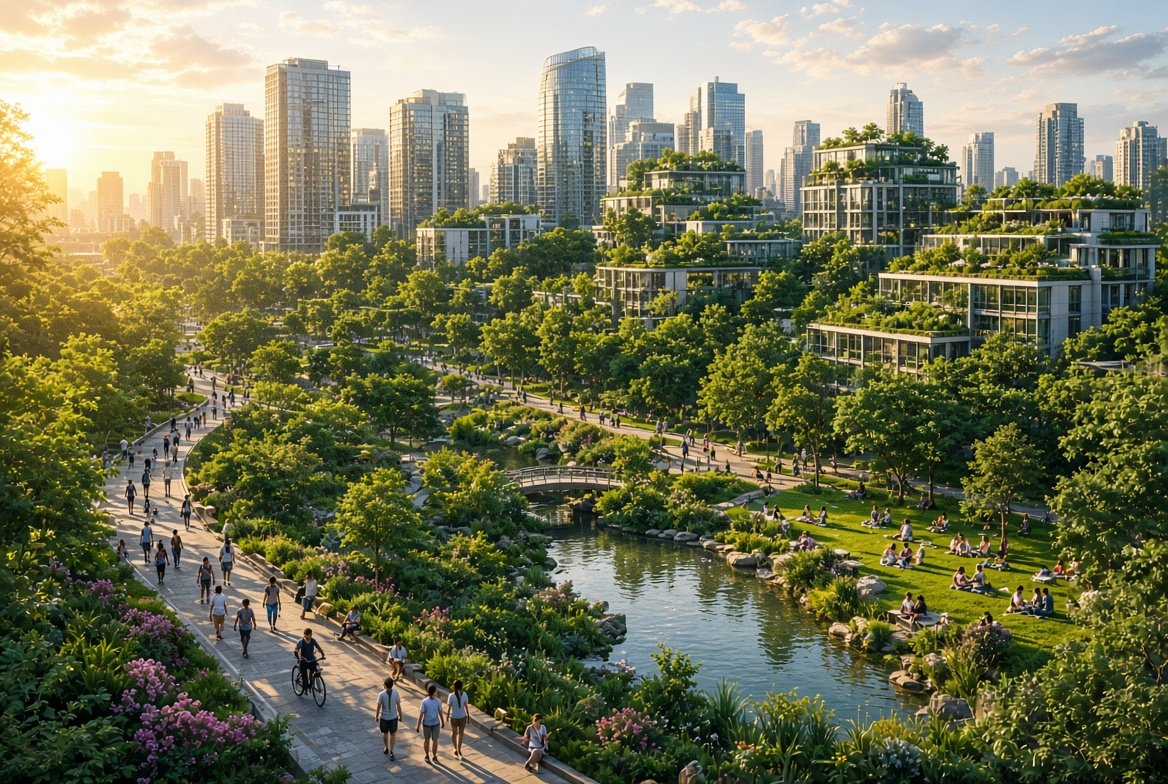
Picture two walks across the same city. On the first, you move between glass-fronted buildings, traffic and crossings, eyes on your phone and shoulders slightly raised. On the second, the route passes under a canopy of trees, alongside a stretch of water, and past a bench where someone is reading. The distance is identical. The experience is not.
That difference is why urban planners, architects and ordinary residents increasingly talk about green space as a core part of city life rather than a decorative extra. Here is how parks, trails and planted streets shape the way people move, meet and rest, and how to make better use of them wherever you live.
More Than Scenery
It is easy to think of a park as an empty area waiting for something better to be built on it. In practice, green spaces do quiet daily work. They give people somewhere to walk without a destination, somewhere for children to run, somewhere for neighbours to cross paths. They also soften the hard edges of a dense city, offering shade, a break from noise and a place to sit that does not require buying anything.
Many people describe the effect simply: a city with accessible greenery feels less rushed. You do not have to treat that as a scientific claim to recognise it as a common experience. Pausing beneath a tree for five minutes during a hectic day is a small, real pleasure.
The Different Kinds of Urban Green
Not every green space looks like a large park. Cities offer a surprising range:
Large parks and gardens. These are the destination spaces, with lawns, ponds, playgrounds and long paths. They suit weekend picnics, group exercise and longer strolls.
Pocket parks and courtyards. Small plots between buildings can be quiet retreats for a lunch break or a phone call away from the office.
Linear trails and park connectors. Paths that follow canals, old rail corridors or waterfronts let people walk, run or cycle for long distances without crossing busy roads.
Street trees and planted verges. Often overlooked, these make everyday routes shadier and more pleasant, especially in warm climates.
Rooftop and community gardens. Shared planting beds bring neighbours together and give residents a small plot of growing space even in apartment-heavy areas.
Each type serves a different need. A healthy city tends to offer all of them in reasonable reach of homes, workplaces and schools.
How Greenery Changes Daily Habits
Green space does not just look good, it nudges behaviour. If a pleasant path exists, more people choose to walk. If a bench sits in shade, someone will stop and read. If a trail connects two neighbourhoods, a few commuters will cycle instead of drive.
These nudges can be small. A lunch break outside rather than at a desk. A walk after dinner instead of another hour of screens. A weekend morning jog along water instead of on a treadmill. Over months, such choices shape routines and, for many people, the general mood of their day.
Greenery also affects how neighbours interact. Playgrounds, community gardens and open lawns create chance meetings that rarely happen indoors. A nod to the same dog walker every morning may not sound like much, but familiarity of this kind is part of what makes a district feel like home.
Why Proximity Matters
A magnificent park is of limited use if it takes an hour to reach. The most valuable green spaces tend to be the ones people can enter on a whim: a few minutes’ walk from the door, accessible without a car, and open at the hours people are actually free.
This is a major reason residents often think about nearby open space when choosing where to live. Take the Jurong Lake District in western Singapore, a part of the city often discussed in planning and property news for its lakeside setting. Developments such as Lucerne Grand are described in press coverage as being close to Jurong Lake Gardens, which illustrates how proximity to a large public garden has become part of how people talk about neighbourhood appeal. Of course, anyone considering a move should visit at different times of the day and judge for themselves how an area feels.
Designing Green Spaces That People Use
Not every park succeeds. Some sit empty because they are hard to reach, poorly lit or uncomfortable. Several design choices tend to make a difference:
Shade and seating. People linger where they can sit comfortably out of the sun. Benches facing interesting views, or each other, encourage conversation.
Clear, safe paths. Good lighting, step-free access and obvious routes make spaces welcoming to older adults, parents with prams and people using wheelchairs.
A mix of activities. Open lawns, play areas, exercise corners and quiet corners let different groups share the space without conflict.
Connections to transport. Parks near stations and bus stops are easier to visit spontaneously.
Planting that suits the climate. Native species typically need less maintenance and support local wildlife, which in turn makes visits more interesting.
Making the Most of the Green Space You Have
You do not need to live beside a famous garden to benefit from greenery. A few habits can help:
- Schedule a weekly green walk. Pick a park or tree-lined street and explore a new corner each time.
- Take meetings outdoors. A walking conversation can be more relaxed than a conference room.
- Learn what grows nearby. Identifying a few local trees or birds turns an ordinary walk into a small treasure hunt.
- Volunteer. Many cities have community-gardening or clean-up groups that welcome newcomers.
- Bring something to do. A book, sketchpad or flask of tea gives you a reason to linger.
Green Space and the Wider Neighbourhood
Greenery works best when it is woven into everyday life rather than isolated from it. Paths that link homes to shops, schools and stations make parks part of normal routines instead of weekend destinations only.
In Singapore’s north, for example, the Lentor area has been described in property coverage as a growing residential pocket with new transport links and planned amenities. Projects such as Lentor Heights are presented as being near a Thomson-East Coast Line station, and the broader point is that connectivity and nearby open space often go hand in hand when people evaluate a neighbourhood. As with any new area, details about future amenities can change, so it is sensible to check current plans from official sources before drawing conclusions.
Looking After Shared Green Space
Green spaces survive on the habits of the people who use them. Taking litter home, keeping dogs under control, respecting quiet zones and staying on marked paths all help keep a park pleasant for everyone. Reporting damaged facilities to the local authority, or joining a friends-of-the-park group, helps make sure spaces are maintained.
It is also worth remembering that green space is a shared resource, not a private one. A park that feels welcoming to families, teenagers, older residents and visitors alike has usually been designed, and then cared for, with many different people in mind.
Final Thoughts
The best cities are not defined only by their tallest buildings or busiest streets. They are also remembered for the places where people can slow down: a shaded avenue, a waterfront promenade, a small garden between two blocks.
Whether you live next to a large park or must hunt for a single tree-lined lane, the habit is the same. Notice the green spaces around you, visit them often and treat them as part of your daily routine. A city looks and feels different when you make room for them.