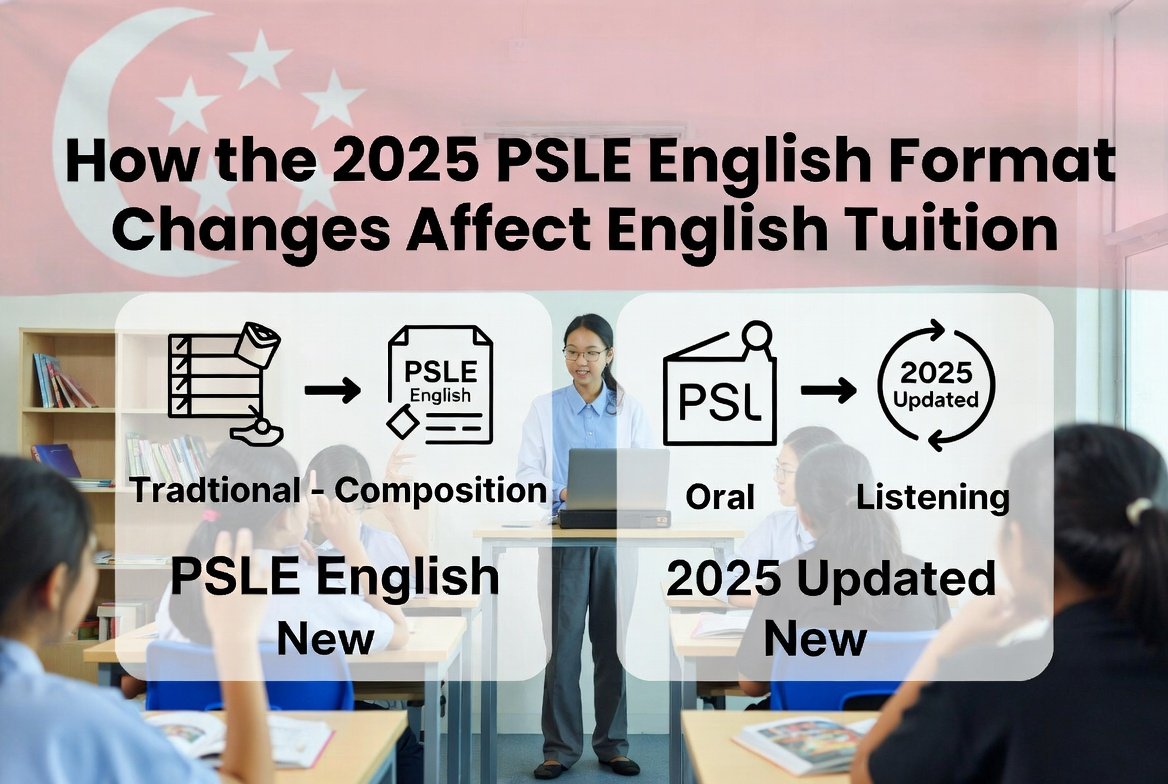
The 2025 PSLE English examination continues Singapore’s focus on assessing practical language skills, critical thinking, and effective communication rather than simple memorisation. As the assessment evolves, parents are paying closer attention to how English Tuition can help their children adapt to the updated expectations and develop stronger language abilities for both examinations and everyday life.
The latest approach encourages students to demonstrate genuine understanding, communicate confidently, and apply language skills in meaningful contexts. As a result, English Tuition has also evolved, placing greater emphasis on comprehension, writing, speaking, and critical thinking instead of relying solely on repetitive practice papers.
Understanding the 2025 PSLE English Examination
The Ministry of Education has designed the PSLE English examination to evaluate a student’s ability to use English effectively across different situations. Rather than testing isolated grammar rules, the examination encourages students to interpret information, express ideas clearly, and communicate with confidence.
The examination consists of several components, each assessing different language skills.
| Examination Component | Main Focus |
| Paper 1 | Writing skills |
| Paper 2 | Language use and comprehension |
| Listening Comprehension | Understanding spoken English |
| Oral Examination | Reading aloud and stimulus-based conversation |
Each component contributes to the overall score, making balanced preparation essential.
Why the 2025 Format Matters
The revised emphasis reflects the changing demands of education and the workplace. Students are expected to become confident communicators who can analyse information, solve problems, and express themselves clearly.
The updated assessment encourages students to:
- Read critically rather than scan for answers.
- Organise ideas logically in writing.
- Speak confidently using appropriate vocabulary.
- Apply grammar naturally.
- Understand different perspectives.
- Develop independent thinking skills.
These abilities support long-term academic success beyond the PSLE.
How English Tuition Has Adapted
Modern English Tuition programmes have changed considerably to meet these evolving expectations.
Instead of focusing only on examination drills, many tuition providers now incorporate activities that strengthen practical language use.
Students often participate in:
- Guided discussions
- Vocabulary development exercises
- Reading analysis
- Oral communication practice
- Creative writing activities
- Critical thinking tasks
- Editing exercises
- Listening practice
This broader approach prepares students more effectively for the examination while improving everyday communication.
Greater Focus on Writing Skills
Paper 1 requires students to communicate ideas clearly and creatively.
Successful writing now depends on more than simply memorising model compositions.
Students benefit from learning how to:
- Plan their compositions logically.
- Develop interesting storylines.
- Write engaging introductions.
- Use descriptive language naturally.
- Organise paragraphs effectively.
- Edit and improve their own work.
Teachers also encourage students to read widely, as exposure to quality writing helps expand vocabulary and sentence variety.
Reading Comprehension Requires Deeper Understanding
Comprehension passages have become increasingly demanding because students are expected to think critically rather than locate obvious answers.
Strong readers learn to:
- Identify the writer’s purpose.
- Understand implied meanings.
- Analyse tone and emotions.
- Draw logical conclusions.
- Support answers using textual evidence.
These skills require regular guided practice rather than last-minute revision.
Oral Communication Becomes Even More Important
Oral examinations continue to assess a student’s ability to communicate naturally and confidently.
Students are evaluated on:
- Reading aloud
- Pronunciation
- Fluency
- Expression
- Stimulus-based conversation
Many children understand the questions but struggle to organise their thoughts under examination conditions.
Regular speaking practice helps students become more comfortable expressing opinions while improving confidence and clarity.
Listening Skills Support Overall Performance
Listening Comprehension is another important aspect of the PSLE English examination.
Students should practise:
- Listening attentively.
- Identifying key information.
- Understanding different speaking styles.
- Recognising emotions through tone.
- Following detailed instructions.
Daily exposure to quality English through books, educational programmes, podcasts, and conversations helps strengthen listening abilities naturally.
Building Vocabulary Through Meaningful Context
One of the biggest changes in English learning is the shift away from memorising long vocabulary lists.
Students now benefit more from learning words through practical usage.
Examples include:
- Reading novels and short stories.
- Discussing current affairs.
- Writing journals.
- Participating in classroom discussions.
- Exploring different writing genres.
Understanding how vocabulary functions within context leads to stronger communication skills.
Developing Critical Thinking
Modern English education encourages students to analyse information and express thoughtful opinions.
During lessons, students may discuss topics such as:
- Environmental protection
- Responsible technology use
- Healthy lifestyles
- Community service
- School experiences
- Social responsibility
These discussions improve reasoning skills while expanding vocabulary and communication abilities.
Effective Revision Strategies for Students
Students preparing for the PSLE can improve steadily by following a structured study routine.
Helpful strategies include:
- Reading English books every day.
- Writing one composition each week.
- Reviewing grammar mistakes carefully.
- Completing timed comprehension exercises.
- Practising oral conversations regularly.
- Listening to quality English programmes.
- Learning new vocabulary through reading instead of memorisation.
Consistency is usually more effective than intensive revision immediately before the examination.
How Parents Can Support Their Child
Parents play an important role in developing strong English skills at home.
Simple daily habits can make a significant difference.
Parents can:
- Encourage daily reading.
- Discuss newspaper articles together.
- Ask open-ended questions.
- Create opportunities for conversation.
- Praise effort and improvement.
- Establish a regular revision schedule.
Positive encouragement helps children become more confident learners.
Choosing an English Tuition Programme
Selecting the right tuition programme involves more than looking at examination results alone.
Parents should consider programmes that provide:
| Feature | Benefit |
| Experienced educators | Better understanding of examination requirements |
| Small class sizes | More personalised learning |
| Regular writing practice | Improved composition skills |
| Oral communication sessions | Greater speaking confidence |
| Comprehensive feedback | Continuous improvement |
| Balanced curriculum | Development of all language skills |
A well-rounded programme supports both academic achievement and lifelong communication skills.
Supporting Students Through Quality Guidance
As examination expectations evolve, structured academic support becomes increasingly valuable. Students often make the greatest progress when they receive personalised feedback, regular practice, and opportunities to strengthen weaker areas in a supportive learning environment.
Many parents choose learning centres such as Mavis Tutorial Centre, where lessons reinforce school learning while helping students develop stronger reading, writing, listening, and speaking skills through consistent practice and guided instruction.
Final Thoughts
The 2025 PSLE English examination reflects Singapore’s commitment to developing confident, capable communicators rather than students who simply memorise answers. Success now depends on strong comprehension, effective writing, critical thinking, and confident communication.
With the support of well-structured English Tuition, students can build these essential skills while preparing effectively for every component of the examination. Learning centres such as Mavis Tutorial Centre focus on developing students’ reading, writing, speaking, and comprehension abilities through structured lessons and consistent practice. Parents looking for additional academic support can explore learning resources and programmes at mavistutorial to help their children strengthen their English foundation and prepare confidently for future challenges.
Consistent practice, quality teaching, and encouragement from both educators and parents provide a strong foundation for long-term academic success. By developing strong language skills from an early stage, students can perform better in examinations while becoming more confident communicators in everyday life.