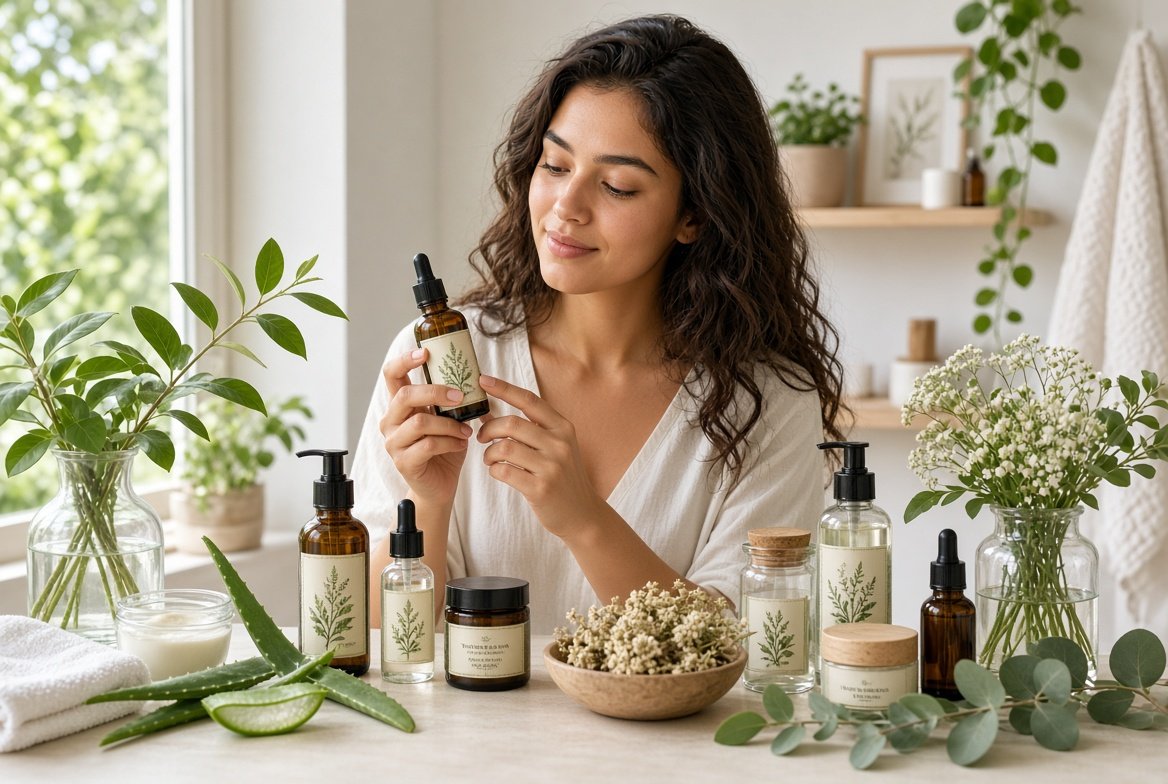
Buying skincare and haircare can become confusing when every bottle seems to promise something different. One highlights a familiar herb, another lists several oils, and a third suggests that you need a complete new routine. It helps to pause before deciding which products belong on your shelf.
Choosing natural beauty products starts with the same practical questions as any other purchase. What do you need the product to do? Does its formula suit you? Will you use it as directed? These questions give you a better starting point than choosing by packaging or an ingredient you recognise.
Start With Your Everyday Needs
Think about what is working in your current routine and what feels missing. Perhaps your face feels tight after washing, or your hair is difficult to detangle. Those observations are more useful than a long list of products you think you ought to own.
Choose one priority at a time. Replacing a cleanser that feels uncomfortable may be more sensible than adding another mask. For tangled hair, reviewing your conditioner and washing habits may be a useful first step.
Keep skin, scalp and hair needs separate when making your list. An oily scalp and dry hair lengths can occur together, so one description may not cover everything.
Read the Whole Formula
A product named after turmeric, saffron or amla usually contains more than that single ingredient. Read the full list alongside the directions and the explanation of its intended use.
The word natural can describe ingredient origins, but it does not guarantee that a formula will suit everyone. Plant extracts, fragrances and essential oils can cause reactions in some people, just as other cosmetic ingredients can.
Start with your own history. If you know that a particular ingredient causes problems, check for it before buying. Ask the seller for clarification if the ingredient information is incomplete or difficult to understand.
You do not need to memorise every unfamiliar name. Focus on clear information about the product, your known sensitivities and whether its purpose matches your needs.
Match Skincare to Your Skin
A basic skincare routine can focus on cleansing, moisturising and daytime sun protection. Add other products when there is a clear reason to use them.
If you prefer lighter textures, read whether a formula is a gel, lotion, cream or oil. Product photographs rarely tell you how something spreads or feels after application.
For skin prone to clogged pores, labels such as noncomedogenic can help narrow your search, although individual responses still vary. For sensitive skin, look carefully at fragrance information and ingredients you have previously tolerated.
A serum and a facial oil may overlap, depending on the formula. Check their roles before buying both. Keep any prescribed treatment in mind when considering optional additions, and ask your clinician if you are unsure about combining them.
Consider Your Scalp and Hair Lengths Separately
When looking at natural hair products, begin with your scalp, then consider your hair texture, length and any colouring or chemical treatments.
Your scalp may need cleansing more often than someone else’s. Straight, fine hair can have different washing and conditioning needs from thick curls. Choose according to how your hair gets oily or dirty and the guidance for your hair type.
Conditioner can help with softness and detangling. Fine hair may need it mainly at the ends, while dry or curly hair may benefit from application through more of the lengths.
An oil, cleanser and conditioning mask do different jobs. Read where each should be applied and whether it needs washing out. Persistent scalp irritation or sudden hair loss deserves individual advice rather than repeated product changes.
Choose a Format You Can Keep Using
An enjoyable routine also needs to fit your schedule. A powder cleanser that needs mixing may suit someone who likes preparing it. Another person may prefer a liquid product that is ready to use.
Read the application steps before ordering. Check whether a hair treatment is used before or after washing and how long it should stay on. For masks, look at both contact time and recommended frequency.
When browsing Old School Rituals, compare those instructions across individual listings rather than assuming every product follows the same ritual.
Consider storage and handling too. Choose a format you can keep closed, clean and stored as directed in the space you have. Convenience matters when you are deciding what you will realistically use.
Compare Value and Expectations
Look at the product size, suggested amount per use and frequency when comparing prices. A large jar is only good value if you are likely to use it within the relevant storage and expiry guidance.
Check what a claim actually promises. Improving the feel of dry lengths is different from treating hair loss. A cosmetic product should not replace treatment for a diagnosed skin or scalp condition.
Treat reviews as descriptions of other people’s experiences. They can help you understand texture, scent or packaging, but their results may not match yours.
Smaller sizes can be useful when available, particularly for an unfamiliar texture. Avoid buying an entire range simply because several items share one ingredient or matching packaging.
Before paying, check delivery costs and the return policy, especially if you are choosing a product online without being able to try its texture.
Introduce New Products Gradually
Try one addition at a time so you can notice how it fits your routine. For a new skincare product, test a small area before applying it widely, following appropriate testing guidance and the product’s contact time.
Keep a note of when you started and how often you used it. Notice comfort, manageability and whether the product performs the task you bought it for.
If it causes redness, itching or swelling, stop using it and seek advice for a severe or persistent reaction. Finding suitable care takes some observation. A few well chosen products that you enjoy using are a sensible goal for both skin and hair.